
IMPLANT AND SURGERY
Dental Implant
A solution that replaces the root without touching the neighbouring teeth
Provided at our clinic in Altunizade, Üsküdar (Istanbul).
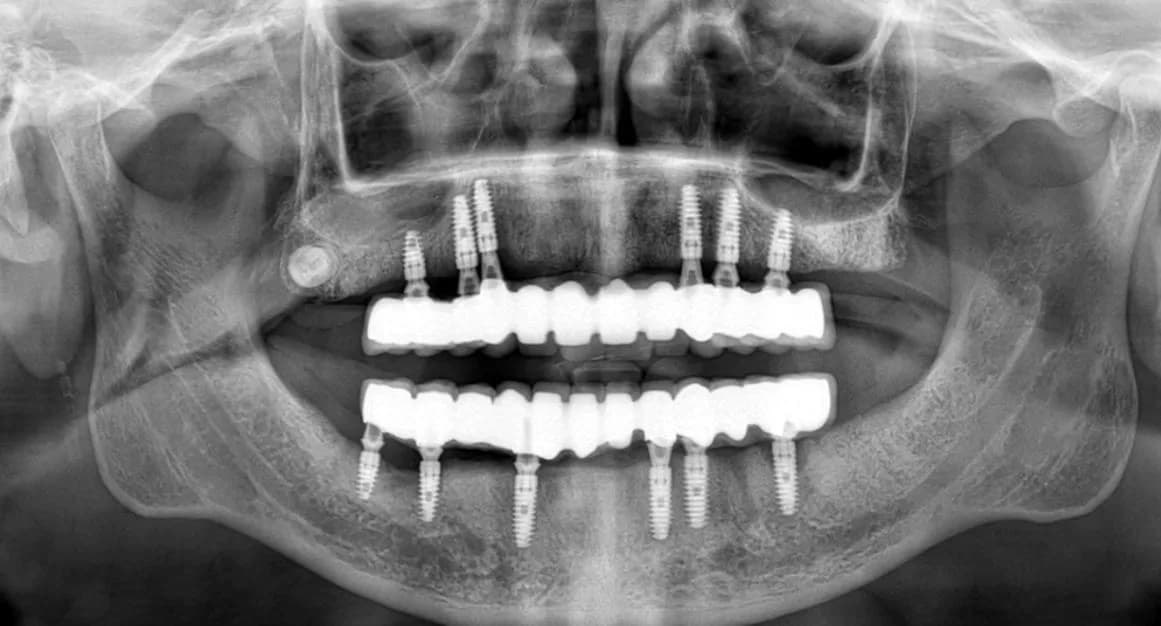
IN SHORT
A dental implant is a titanium screw placed in the jawbone in place of the root of a lost tooth. The bone fuses with the surface of the implant (osseointegration) and the implant reaches the strength needed to carry the tooth to be made over it. This process usually takes 3–6 months. An implant differs from a bridge in that it does not require the neighbouring teeth to be touched. For it to be applied, there needs to be sufficient bone volume in the jaw; if there is not, a bone graft or sinus lifting may be needed.
What is a dental implant and how does it work?
When a tooth is lost, it is not only the visible part that is lost, but also the root within the bone. During chewing the root sends a stimulus to the bone; this stimulus keeps the bone alive. When the root is gone, the stimulus stops and the bone in that area gradually begins to resorb.
The implant takes the place of the lost root. It is made of titanium. The reason titanium is used in dentistry is that bone tissue can fuse directly to the surface of this metal. This event is called osseointegration and usually takes 3–6 months.
The three parts of an implant
The implant body (fixture). The screw placed in the jawbone; it takes the place of the root.
The abutment. The connecting part between the implant and the tooth; it protrudes above the gum.
The superstructure (crown). The visible tooth; made of zirconia or another material.
It is important that these three parts are separate: if a problem arises in the superstructure, only that part can be renewed without replacing the entire implant.
What is done depending on how many teeth are missing?
If a single tooth is missing: one implant is placed and a crown is made on top of it. The neighbouring teeth are not touched.
If several teeth are missing side by side: a separate implant may not be needed for each tooth. A three-tooth bridge can be made on two implants. How many implants are needed is determined according to the length of the gap and the condition of the bone.
If all the teeth in a jaw are missing: an implant is not placed for each tooth. A fixed prosthesis carrying the whole jaw can be made on four or six implants. These methods are described separately on the All-on-4 and All-on-6 pages.
Who can it be applied to?
There is no upper age limit for an implant. What is decisive is not age, but the condition of the bone and general health.
Those who have the bone volume and density in the jaw to carry the implant
Those whose gum health is good or can be improved with treatment
Those who can maintain oral care regularly
Suitability is determined by an intraoral examination and X-ray evaluation.
Who is it not suitable for? In which cases is an additional procedure needed?
Insufficient bone volume. This does not mean an implant cannot be done; bone volume can be increased with a bone graft or, in the upper jaw, sinus lifting. This lengthens the treatment time.
Uncontrolled diabetes. Surgery is not planned until the blood sugar is regulated; the HbA1c value is assessed.
Heavy smoking. It adversely affects the fusion of the implant to the bone and increases the risk of implant loss.
Use of bisphosphonate-type medication or a history of radiotherapy to the jaw region. Assessment together with your doctor and the relevant specialist is required.
Untreated gum disease. The tissues around the implant can also become diseased; the existing disease must be resolved first.
A severe teeth-clenching habit. An implant can be done, but the use of a night guard is required.
Young patients whose jaw development is not complete. An implant does not move together with the bone; if the jaw continues to grow, the implant is left behind.
If, following the examination, an implant is assessed to be unsuitable, this is stated clearly and any alternative options are explained.
The treatment process step by step
Examination and X-ray
Bone volume, density and anatomical structures (the sinus cavity, the lower jaw nerve) are assessed.
Planning
The position, angle, diameter and length of the implant are determined. Whether an additional procedure is needed becomes clear at this stage.
Preparation
Any gum disease and decay are treated.
Surgery
The procedure is carried out under local anaesthesia. In patients with a high level of anxiety, the treatment sessions can be divided and breaks can be taken. The implant socket is prepared in the bone and the implant is placed.
Healing (osseointegration)
Usually 3–6 months. The bone is allowed to fuse to the implant. A temporary solution can be applied during this period.
Abutment and impression
Once fusion is complete, the abutment is fitted and an impression is taken.
Superstructure
The crown is prepared and fixed to the implant.
Healing and maintenance
In the first days after surgery, swelling, bruising and tenderness are expected findings; they usually subside within 3–5 days.
During the healing period a soft diet is needed and no force should be placed on the implant area. Smoking directly affects implant success during this period.
In the long term, the only decisive factor is oral care. An implant does not decay — but the gum and bone around it can become diseased. This is called peri-implantitis, and if left untreated it leads to implant loss. Floss, an interdental brush and a check-up every six months are needed.
Risks and possible complications
Failure of the implant to fuse to the bone. The implant is lost and can usually be replaced after healing.
Peri-implantitis. Inflammation of the tissues around the implant. It is the most frequent long-term problem.
Nerve damage. Numbness or tingling may develop in the lower jaw. X-ray evaluation and digital planning are carried out to reduce this risk.
Sinus perforation. This may be seen in the upper jaw.
Loosening of the screw or fracture of the superstructure.
Aesthetic problems. Particularly in the front region, the gum level and the fit of the crown can be challenging.
Implant success rates are reported as high in the scientific literature, but no treatment can offer a hundred-per-cent guarantee of success.
Implant, bridge and removable denture
There are three ways to complete a missing tooth. All three are methods in use; which one is suitable is determined according to the clinical situation.
The most important feature of a bridge is this: the teeth on either side of the missing tooth are cut and crowns are made over them. If these teeth are healthy, substance has been removed from two healthy teeth, and this is irreversible. With an implant the neighbouring teeth are not touched.
On the other hand, an implant is a surgical procedure, takes longer and requires sufficient bone in the jaw. A bridge is completed in a shorter time and does not require surgery.
Compare the options
| Implant | Bridge | Removable denture | |
|---|---|---|---|
| Neighbouring teeth | Not touched. | Cut; crowns are made over them. Irreversible. | Not touched; the denture holds on to the teeth. |
| Bone | Because it takes the place of the root, the bone is preserved. | The bone in the missing-tooth area continues to resorb. | The bone continues to resorb. |
| Fixedness | Fixed. Cannot be removed. | Fixed. Cannot be removed. | Removable. |
| Procedure | Surgery is required. | No surgery required. | No surgery required. |
| Time | Fusion 3–6 months. | A few weeks. | A few weeks. |
| Bone requirement | Sufficient bone volume is required. | Not required. | Not required. |
| Maintenance | Like a natural tooth; interdental cleaning is essential. | The underside of the bridge needs cleaning. | Removed and cleaned. |
Which option is suitable is decided together after an intraoral examination.
Before & after
Before-and-after images of some treatments carried out at our clinic. Results vary from person to person.
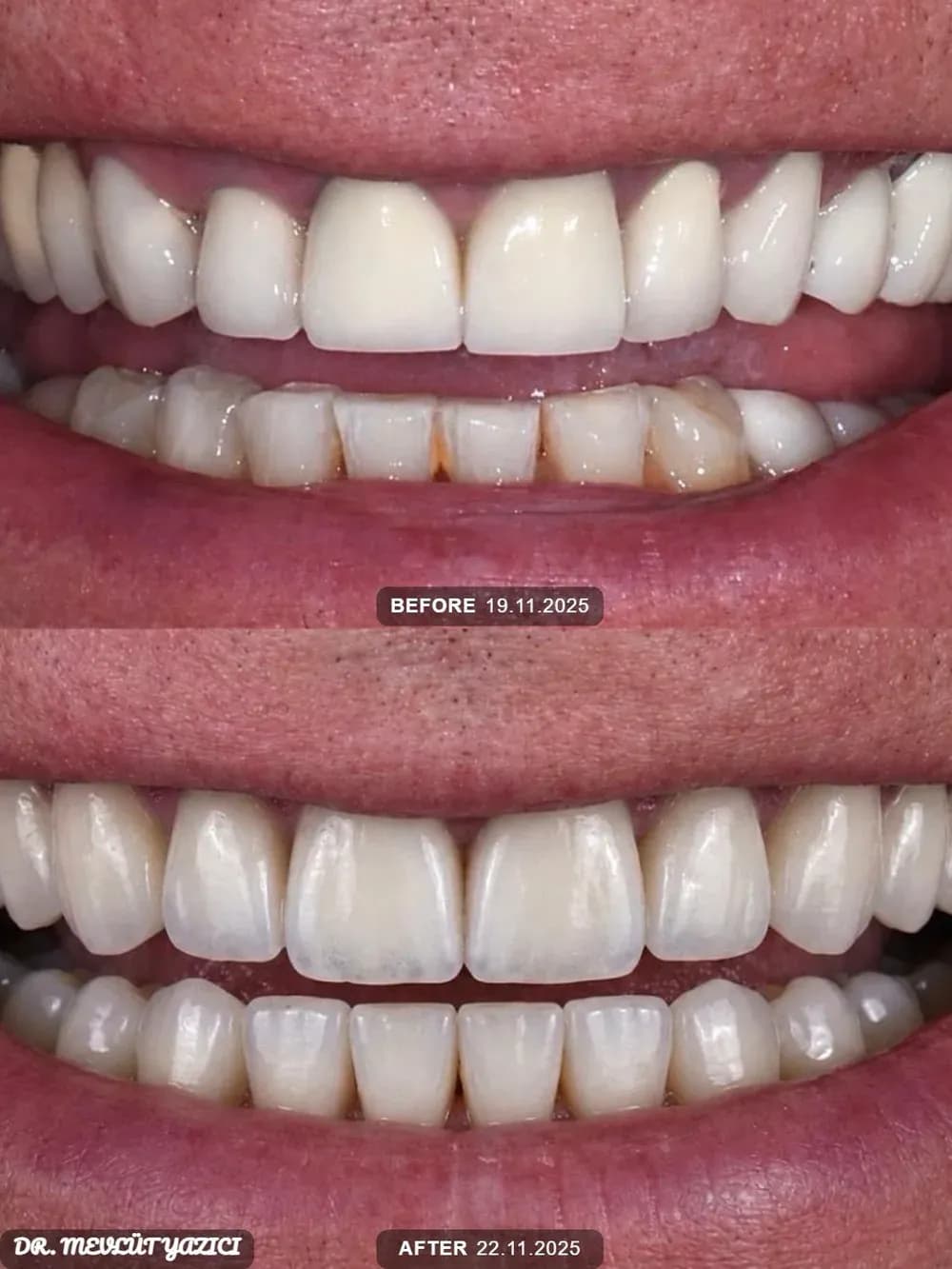
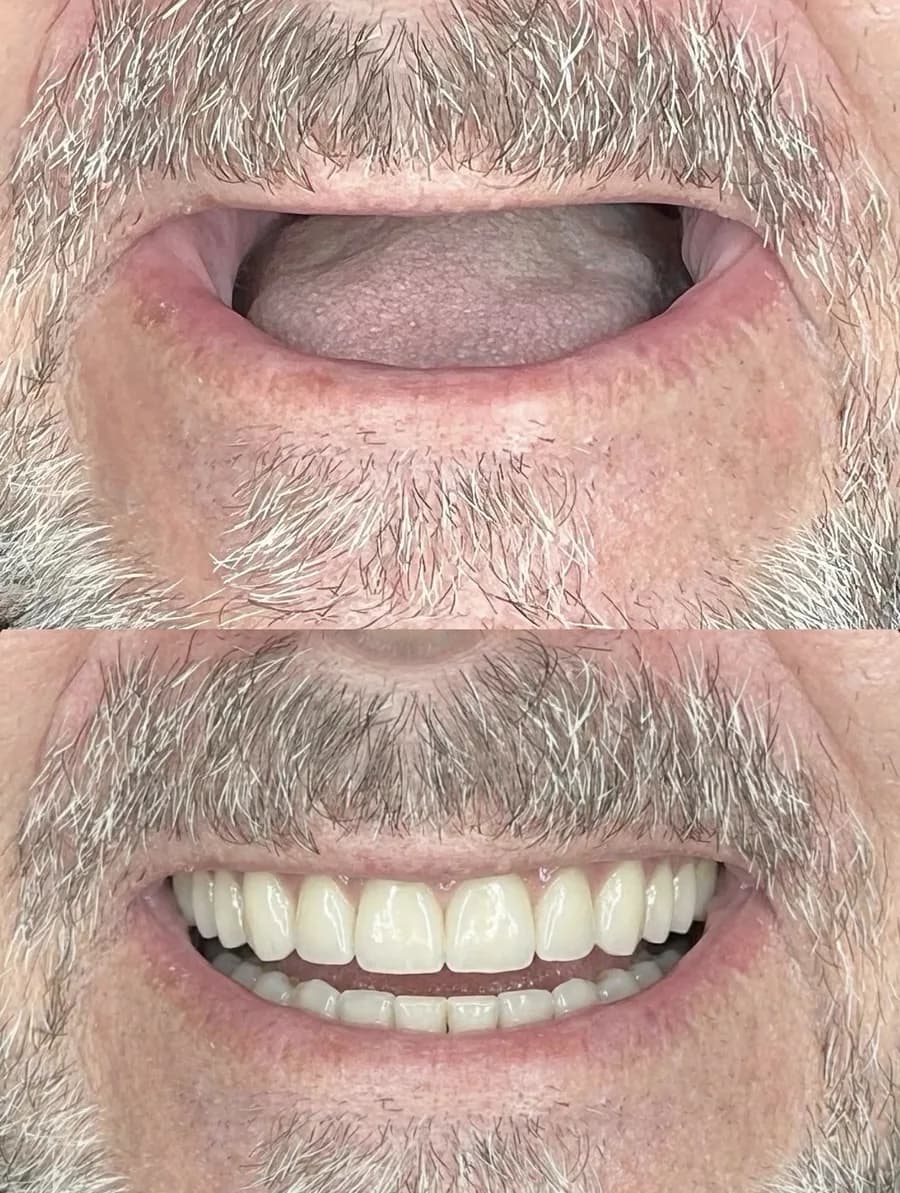
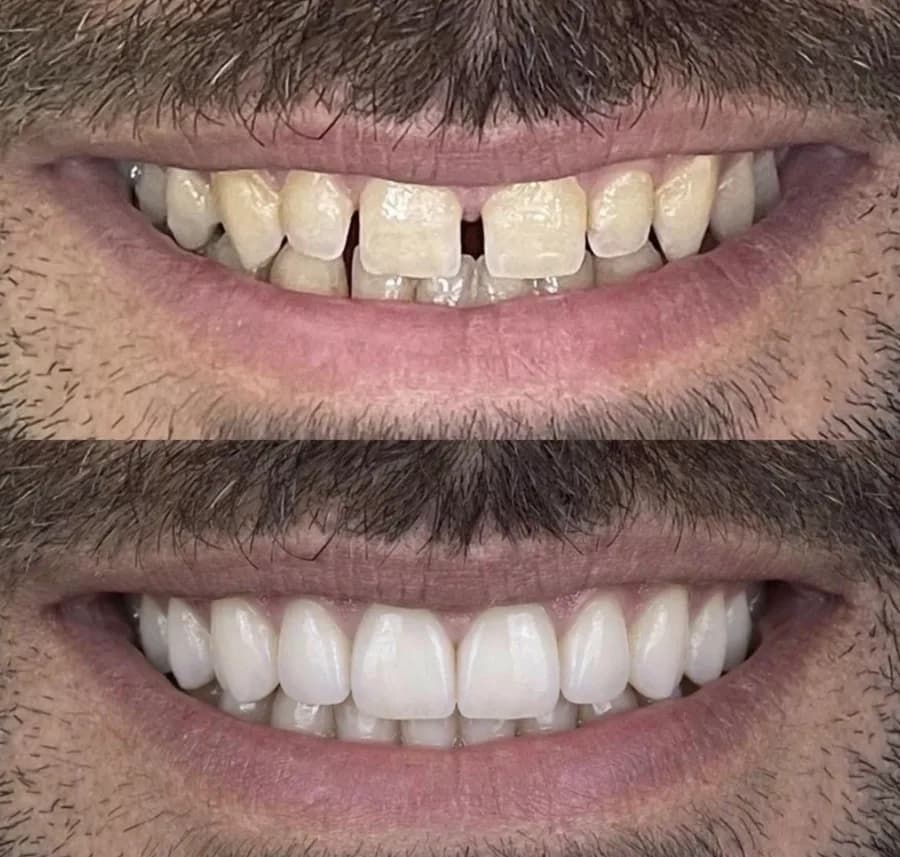
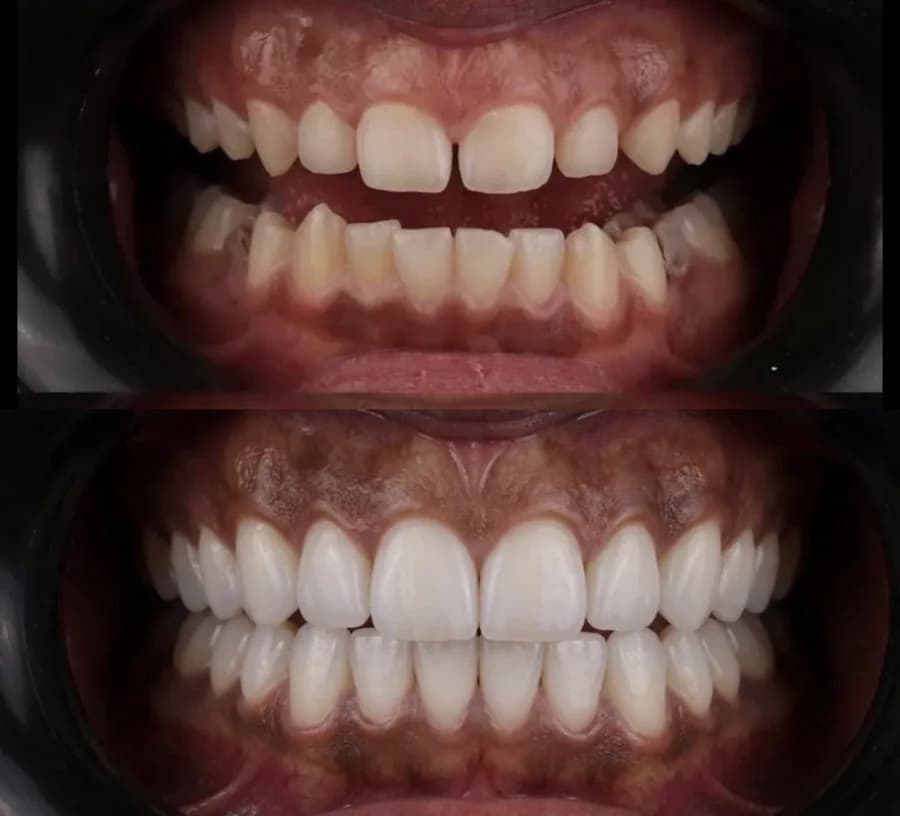
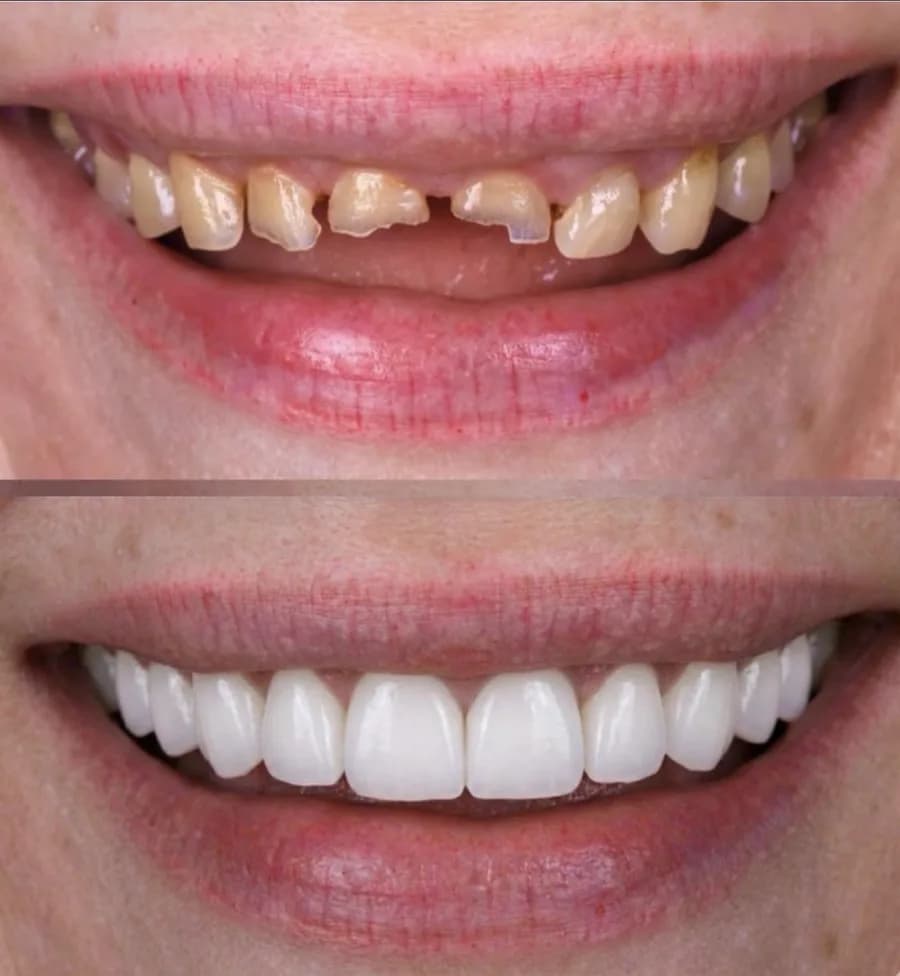
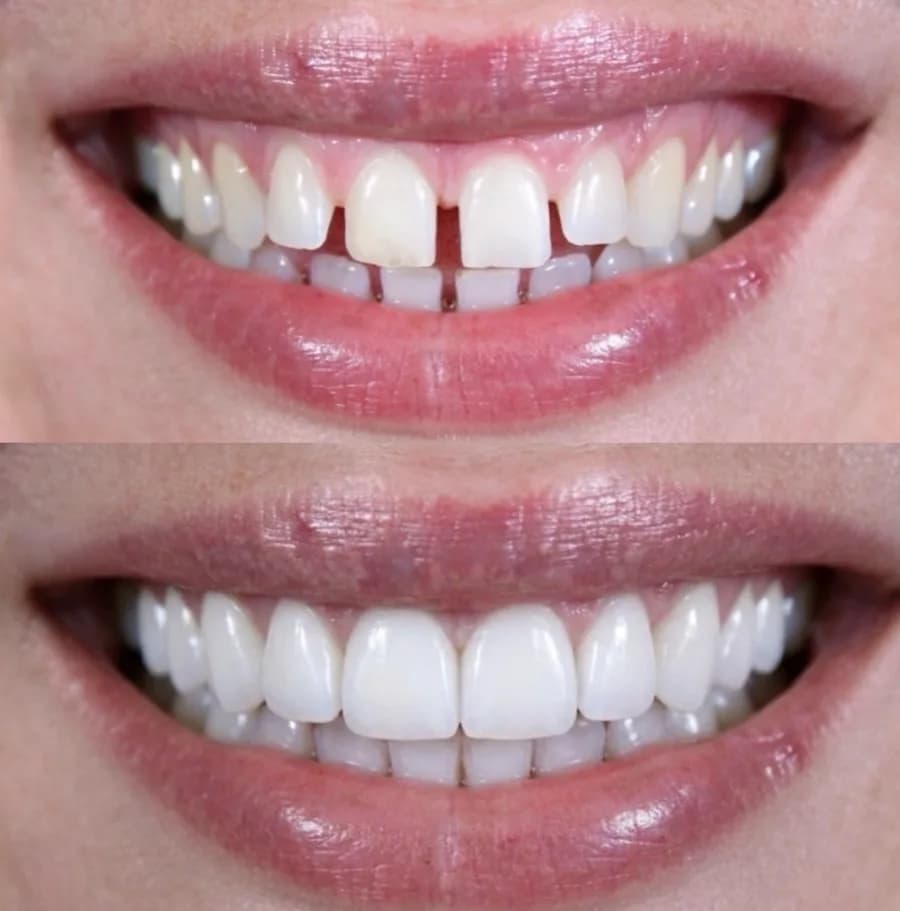
In every surgical or interventional procedure, results may vary from person to person. It is recommended that you obtain detailed advice from your dentist before the procedure.
All images are shared with the explicit consent of our patients.
See all resultsFrequently Asked Questions
The surgical procedure is carried out under local anaesthesia and no pain is felt during it. After the anaesthesia wears off, tenderness, swelling and mild pain lasting a few days may be seen; these can be kept under control with the medication your dentist recommends.
With a bridge, the teeth on either side of the missing tooth are cut and crowns are made over them. If these teeth are healthy, substance has been irreversibly removed from two healthy teeth. With an implant the neighbouring teeth are not touched, and because it takes the place of the root, the bone is preserved. On the other hand, an implant is a surgical procedure, takes longer and requires sufficient bone volume. The decision is made according to the condition of the neighbouring teeth and the bone volume.
There is no upper age limit; what is decisive is the condition of the bone and general health. The lower limit is the completion of jaw development. An implant placed while the jaw is still growing is left behind, because the neighbouring teeth move.
Insufficient bone does not mean an implant definitely cannot be done. Bone volume can be increased with a bone graft or, in the upper jaw, sinus lifting. This lengthens the treatment time. How insufficient the bone is is assessed with an X-ray and a clinical examination.
The implant itself does not decay. However, the gum and bone around it can become diseased. This is called peri-implantitis, and if left untreated it leads to implant loss. The main factor determining the lifespan of an implant is oral care.
It varies depending on oral care, gum health, chewing habits, smoking and regular check-ups. A definite duration cannot be guaranteed. An implant that is well maintained can be used for many years.
Smoking adversely affects the fusion of the implant to the bone and increases the risk of implant loss. It does not mean treatment cannot be done, but the success rate falls. Stopping or reducing smoking, particularly before the procedure and during the healing period, is recommended.
Allergy to titanium is extremely rare. If you have a known metal allergy you should inform your dentist; where necessary, metal-free implant options can be assessed.
Related treatments
The content on this site is for information only and does not replace a clinical examination. The suitability, duration and scope of treatment are determined after a clinical assessment.
This content was prepared by Dt. Mevlüt Yazıcı.
Request an appointment.
Fill in the form to request an appointment and we'll get back to you shortly. You can also call us directly or message us on WhatsApp.
Altes Diş Kliniği
Altunizade, Üsküdar, İstanbul
- PHONE+90 533 474 43 94
- EMAIL[email protected]
- ADDRESSAlperen İş Merkezi, Valide-i Atik Mahallesi, Altunizade, Nuhkuyusu Cd D:191/B, 34664 Üsküdar/İstanbul
- WORKING HOURSWeekdays 10:00–19:00 · Saturday 10:00–16:00 · Sunday closed