
IMPLANT AND SURGERY
Tooth Extraction
Controlled removal of a tooth that cannot be saved
Provided at our clinic in Altunizade, Üsküdar (Istanbul).
IN SHORT
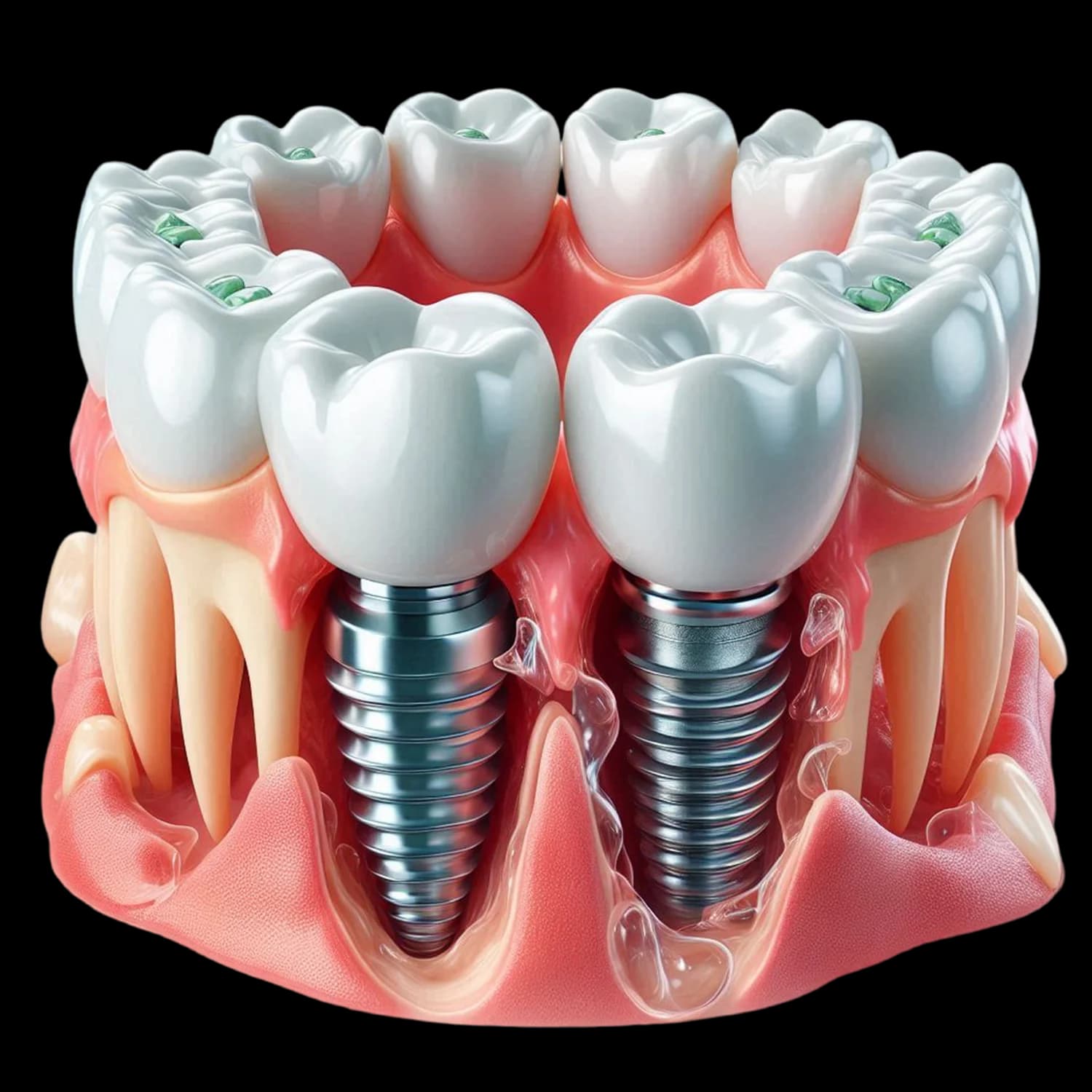
Tooth extraction is the removal, without harming the surrounding tissues, of a tooth that for various reasons cannot be saved. The procedure is based on numbing the area and then separating the tooth from its connective tissue and removing it. Tooth extraction is the last option; if a tooth can be saved with a filling, root canal or other methods, preserving it is preferred, because nothing replaces a natural tooth exactly.
When is a tooth extraction necessary?
In dentistry, the priority is to preserve the tooth. Tooth extraction is the last option, resorted to in situations where the tooth cannot be saved by any other method. For this reason the decision to extract is made after the possibilities of saving the tooth have been assessed.
Decay that has advanced too far to be saved with a filling or root canal.
Teeth that have lost their support and become loose because of advanced gum disease.
Teeth that are broken beyond repair or damaged by trauma.
Situations deemed necessary within the scope of orthodontic treatment.
Teeth that are a source of infection and do not respond to treatment.
What these reasons have in common is that preserving the tooth is no longer possible, or that keeping the tooth in the mouth harms the surrounding tissues. As extraction is not the first option for a tooth that can be saved, the decision is always made after the possibilities of preserving the tooth have been assessed.
Simple and surgical extraction
Tooth extraction is carried out in one of two ways, according to the condition of the tooth. A tooth that is visible in the mouth and whose attachment has weakened is mostly removed by simple extraction, while broken, impacted or teeth with a complex root structure may require surgical extraction. Which method is suitable is determined by examination.
This distinction also affects the difficulty of the procedure and the healing time. In a simple extraction the tooth is removed directly, whereas in a surgical extraction the gum and, where necessary, a small amount of bone are reached; for this reason sutures and a slightly longer healing period may be expected after a surgical extraction. In both cases the procedure is carried out with numbing so that no pain is felt.
In which situations is further assessment needed?
Tooth extraction can be performed on almost every patient who needs it; however, some situations require additional precautions or planning before the procedure. For this reason the general state of health and any medication used should be reported to the dentist before the examination.
The use of blood-thinning medication and bleeding disorders require additional precautions in the procedure plan.
Uncontrolled diabetes can slow healing and affect the risk of infection.
In people with certain heart conditions or a prosthetic heart valve, an antibiotic precaution may be needed.
Some bone medications (bisphosphonates) can affect the healing of the jawbone; the use of these medications must be reported.
The procedure step by step
Assessment
The tooth and surrounding tissues are examined; in cases where it is deemed necessary, an X-ray or further imaging may be requested.
Anaesthesia
The procedure area is numbed with local anaesthesia; no pain is felt during the extraction.
Extraction
The tooth is separated from its connective tissue and removed in a controlled way.
Completion
Bleeding is checked, sutures are placed if needed and aftercare is explained.
After the extraction and healing
After the extraction, a blood clot forms in the socket; this clot is the basis of healing and must be protected. In the first 24 hours after the procedure, disturbing the area, rinsing vigorously, smoking and sucking movements should be avoided; these can cause the clot to come loose and delay healing.
On the first day soft and lukewarm foods are preferred. Swelling and mild pain are expected situations and usually decrease within a few days. Advice on pain and aftercare is given by the dentist; if complaints are more than expected or increasing, the dentist should be consulted.
Smoking is one of the main factors that negatively affects the healing of the extraction area; staying away from smoking throughout the healing period helps both to protect the clot and to reduce the risk of infection. Maintaining oral hygiene is also important, but on the first day the extraction area is kept clean gently around it, without brushing it directly.
What happens to the gap after a tooth is extracted?
When a tooth is extracted, the gap left behind can cause problems over time. The neighbouring teeth can tilt towards the gap, the tooth in the opposing jaw can over-erupt, and the jawbone beneath the gap can begin to resorb. These changes make both chewing and any future treatment more difficult.
For this reason, completing the gap with a suitable method should be considered after the extraction. The options — a dental implant, bridge or prosthesis — and which one is suitable are determined by examination, according to the position of the tooth and the condition of the neighbouring teeth.
Risks and possible situations
Bleeding, swelling and temporary discomfort may occur after the procedure.
Early loss of the clot can lead to a painful condition called “dry socket”.
If the aftercare advice is not followed, an infection may develop in the area.
In the lower back teeth, proximity to the nerve, and in the upper back teeth, proximity to the sinus cavity, is taken into account in the procedure plan.
Most of these possible situations can be prevented or managed by assessment before the procedure and by following the aftercare advice afterwards. For this reason, following the advice given after the extraction is important for a trouble-free recovery.
Comparison of simple and surgical extraction
Tooth extraction is carried out as simple or surgical, according to the condition of the tooth. The table below compares the two approaches.
Compare the options
| Simple extraction | Surgical extraction | |
|---|---|---|
| Tooth treated | A visible, accessible tooth in the mouth | A broken, impacted or complex-rooted tooth |
| Approach | The tooth is removed directly | The tooth is removed by reaching the gum/bone |
| Suture | Usually not needed | Often needed |
| Healing | Short | May be a little longer |
Which option is suitable is decided together after an intraoral examination.
Frequently Asked Questions
As the procedure area is numbed with local anaesthesia, no pain is felt during the extraction. The mild pain that can occur after the anaesthesia wears off is managed with the dentist's advice.
Protecting the clot is especially important in the first 24 hours; vigorous rinsing, smoking and sucking movements should be avoided, and soft and lukewarm foods should be preferred. Detailed advice is given by the dentist.
Leaving the gap empty for a long time can lead to the neighbouring teeth shifting and to bone resorption. For this reason, completing the gap should be considered; the suitable option is determined by examination.
After a simple extraction most people can return to daily life within a short time. After surgical extractions, resting on the first day and avoiding heavy physical activity helps healing. The definite advice is given by the dentist according to the extent of the procedure.
Related treatments
The content on this site is for information only and does not replace a clinical examination. The suitability, duration and scope of treatment are determined after a clinical assessment.
This content was prepared by Dt. Mevlüt Yazıcı.
Request an appointment.
Fill in the form to request an appointment and we'll get back to you shortly. You can also call us directly or message us on WhatsApp.
Altes Diş Kliniği
Altunizade, Üsküdar, İstanbul
- PHONE+90 533 474 43 94
- EMAIL[email protected]
- ADDRESSAlperen İş Merkezi, Valide-i Atik Mahallesi, Altunizade, Nuhkuyusu Cd D:191/B, 34664 Üsküdar/İstanbul
- WORKING HOURSWeekdays 10:00–19:00 · Saturday 10:00–16:00 · Sunday closed