
AESTHETIC DENTISTRY
Zirconia Crown
Metal-free full-ceramic crown
Provided at our clinic in Altunizade, Üsküdar (Istanbul).
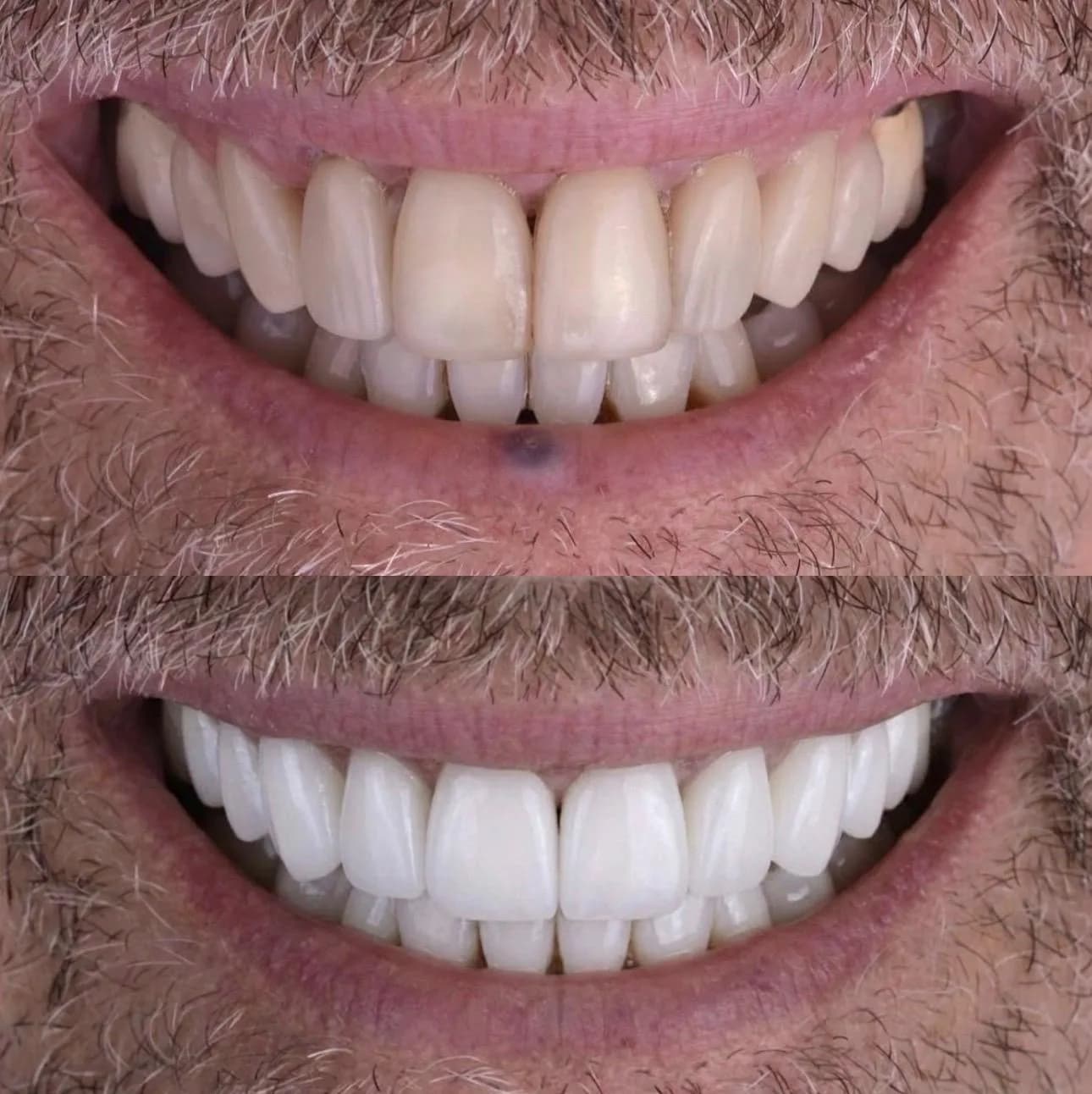
IN SHORT
A zirconia crown is a type of crown made from zirconium oxide ceramic that covers the entire surface of the tooth. For the crown to fit, approximately 1–1.5 mm of substance is removed from the outer surface of the tooth; this procedure is irreversible. Because it contains no metal substructure, no grey line forms at the gum margin. As its resistance to chewing forces is high, it can also be used on back teeth and in bridges.
What is a zirconia crown?
Zirconium oxide is a material in the ceramic group. In dentistry it is used to make crowns that are fitted over the tooth and cover it on all its surfaces.
In conventional porcelain crowns there is a metal substructure beneath the porcelain. The metal gives the porcelain durability, but it does not transmit light and can, over time, cause a grey line to appear at the gum margin. Zirconia crowns have no metal substructure; the durability is provided by the zirconia itself.
In which cases is it applied?
In teeth with extensive substance loss that are too damaged to be repaired with a filling
In teeth that have had root canal treatment and have an increased risk of fracture
In discoloured teeth that do not respond to whitening
In the correction of shape and size irregularities
In making a bridge (by crowning the teeth on either side of the missing tooth)
In prostheses over implants
Whether a crown is suitable is determined according to the amount of healthy tissue remaining in the tooth and the gum health.
In which cases is it not suitable?
If only a colour or minor shape correction is wanted. In this case, methods that do not require, or require less, removal of tooth substance (bonding, prepless veneers, whitening) are considered. Cutting a healthy tooth purely for colour is not an appropriate approach.
If there is untreated gum disease or active decay. A crown is not made until these are resolved.
If insufficient tissue remains in the tooth to carry the crown. In this case, root canal treatment and a post (support) may first be needed; in some cases extraction of the tooth comes onto the agenda.
In young patients whose jaw development is not complete.
In a severe teeth-clenching or grinding habit. A crown can be made, but the use of a night guard is required.
The application process step by step
Examination and planning
The condition of the tooth, gum health and bite are assessed. If necessary, an X-ray is taken.
Colour selection
A shade guide is used to achieve harmony with the neighbouring teeth. Colour selection is made before the tooth is prepared; after preparation the teeth become dry and the perception of colour changes.
Tooth preparation
Approximately 1–1.5 mm of substance is removed from the outer surface of the tooth. The procedure is carried out under local anaesthesia.
Impression
An impression is taken with a conventional impression material or a digital impression is taken with an intraoral scanner.
Temporary crown
A temporary crown is fitted to protect the tooth until the permanent crown is prepared.
Trial
The prepared crown is tried in the mouth; colour, form and bite are checked. Changes can be requested at this stage.
Cementation
The crown is fixed to the tooth with a suitable cement.
Lifespan and maintenance
The usage period of a zirconia crown varies depending on oral care, gum health, the bite relationship and chewing habits. A definite duration cannot be guaranteed.
The crown itself does not decay. However, the boundary where the crown ends and the tooth begins (the crown margin) can decay. The cleaning of this area is the main factor determining the lifespan of the crown. The use of an interdental brush or floss and check-ups every six months are recommended.
Biting hard objects (ice, hard-shelled nuts, a pen), nail biting and teeth clenching can lead to fracture.
Risks and possible complications
Tooth preparation is irreversible. Before deciding on a crown, it is important to consider the less invasive options.
Sensitivity after preparation. This is usually temporary. In some cases, inflammation may develop in the tooth nerve and root canal treatment may be required.
Fracture or cracking. This may be seen particularly in patients with a teeth-clenching habit.
Gum recession. Over time, the crown margin may become visible.
Wear on the opposing tooth. Zirconia is a hard material. If the surface of the crown is not sufficiently polished, wear may be seen on the natural tooth in the opposing jaw.
Discolouration along the cementation line over time.
The difference between zirconia and E-max
Both are metal-free ceramic materials. The difference lies in the light transmission and the fracture resistance of the material. These two properties are inversely proportional to each other: the more light a material transmits, the lower its strength.
Which material is suitable is determined according to the position of the tooth in the mouth, the chewing force placed on it, whether a bridge is to be made, and any teeth-clenching habit. One material is not superior to the other; they suit different conditions.
Compare the options
| Zirconia | E-max (lithium disilicate) | |
|---|---|---|
| Material | Zirconium oxide ceramic | Lithium disilicate glass ceramic |
| Light transmission | Lower. High-translucency types exist; in these the strength is reduced. | Closer to natural tooth enamel. |
| Fracture resistance | Higher. | Lower. |
| Area of use | Front and back region, bridges, prostheses over implants. | Mainly the front region, single-tooth crowns, veneers, inlays/onlays. |
| Long bridge | Can be applied. | Limited. |
| Wear on the opposing tooth | May increase if the surface is not well polished. | Less. |
| Teeth-clenching habit | Assessed together with a night guard. | Requires further assessment. |
Which option is suitable is decided together after an intraoral examination.
Before & after
Before-and-after images of some treatments carried out at our clinic. Results vary from person to person.
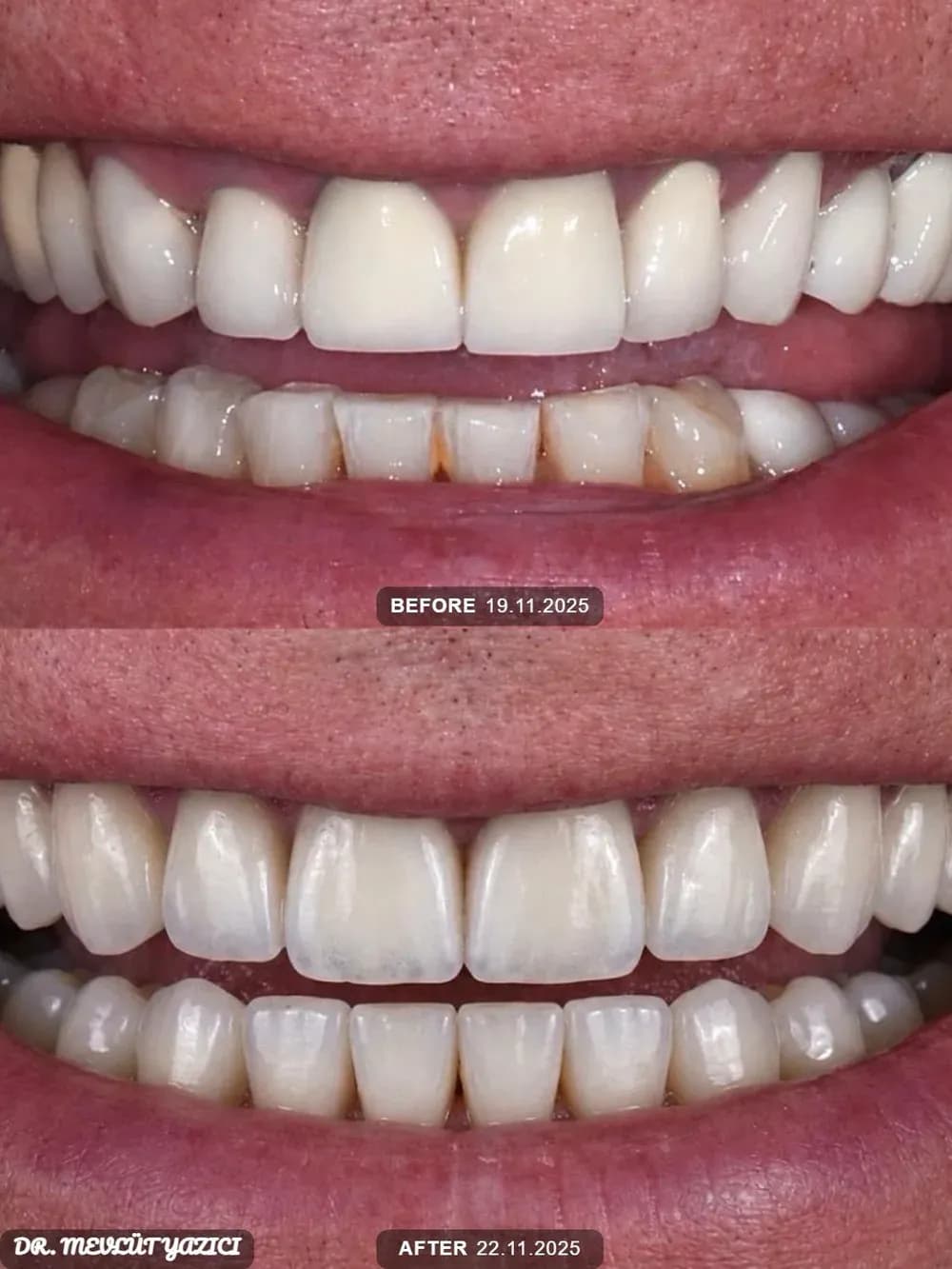
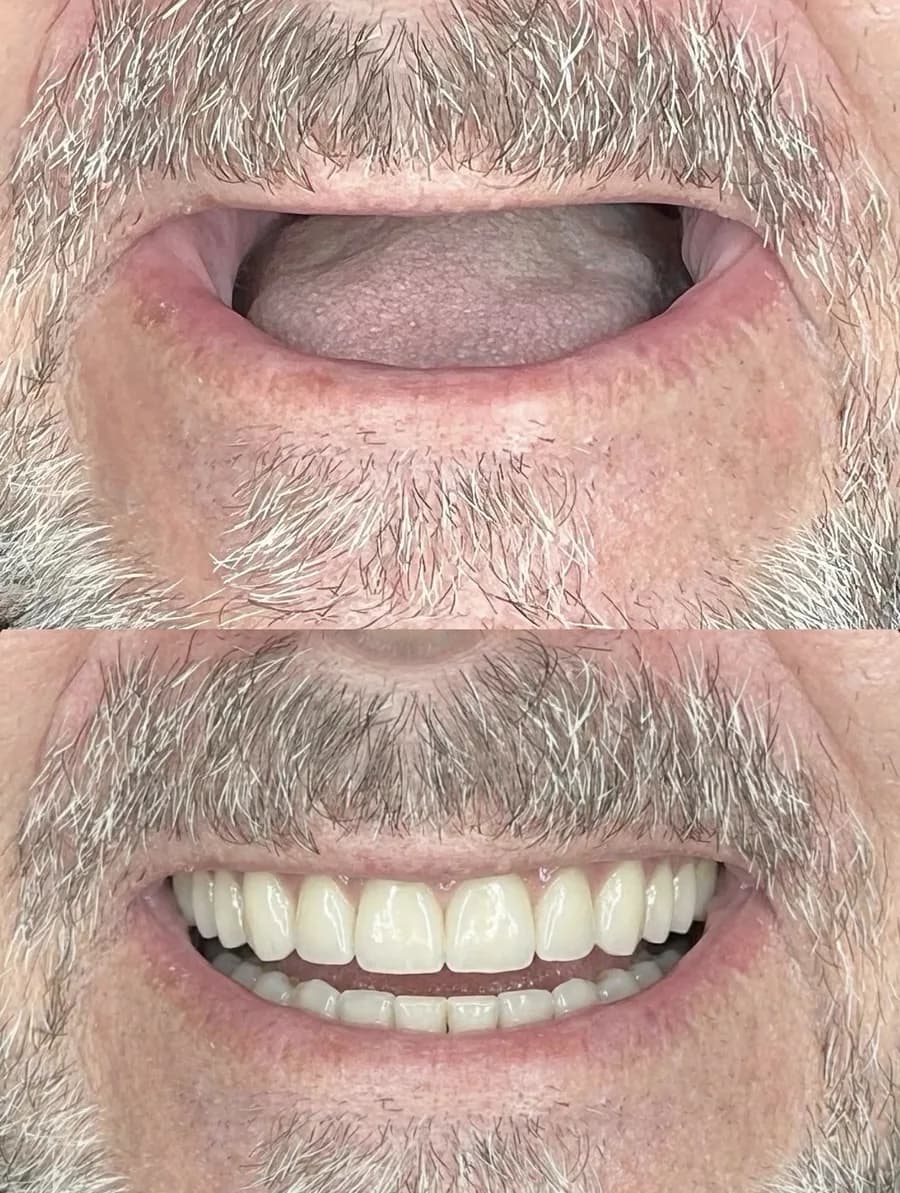
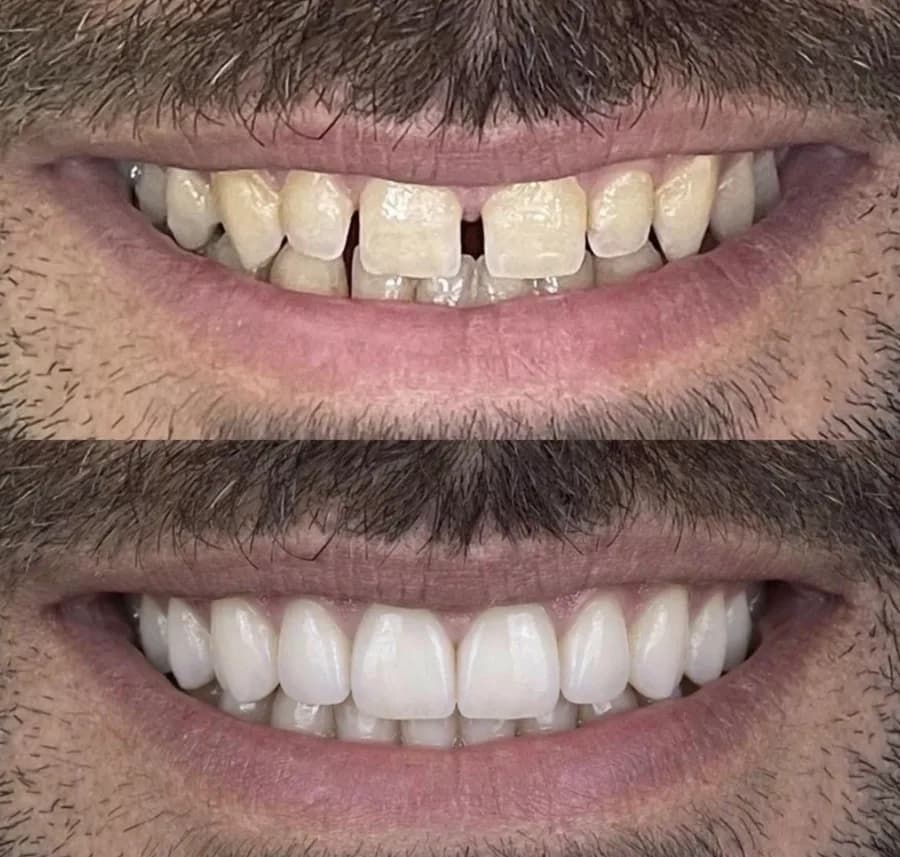
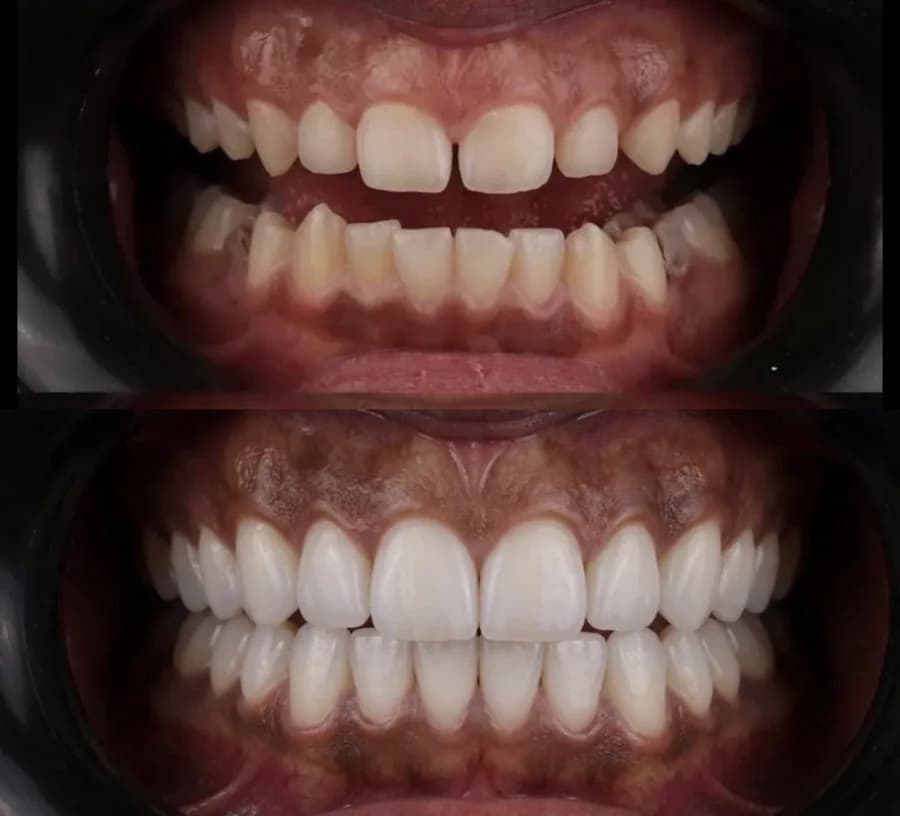
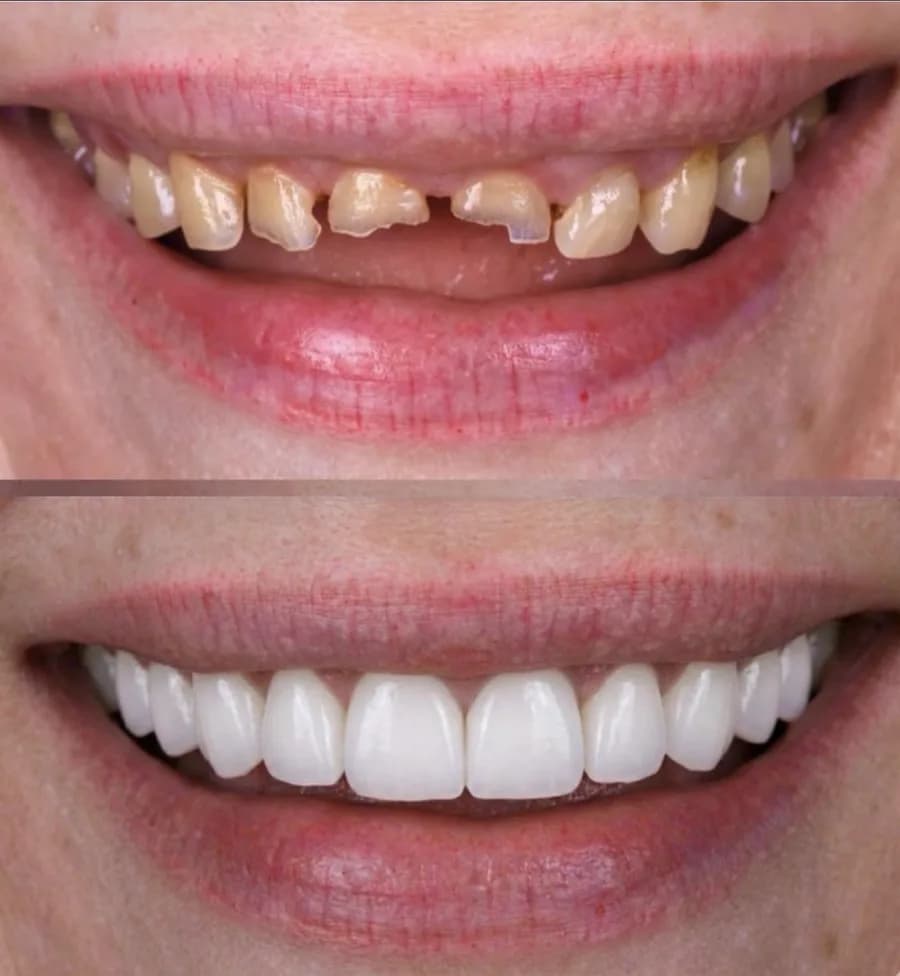
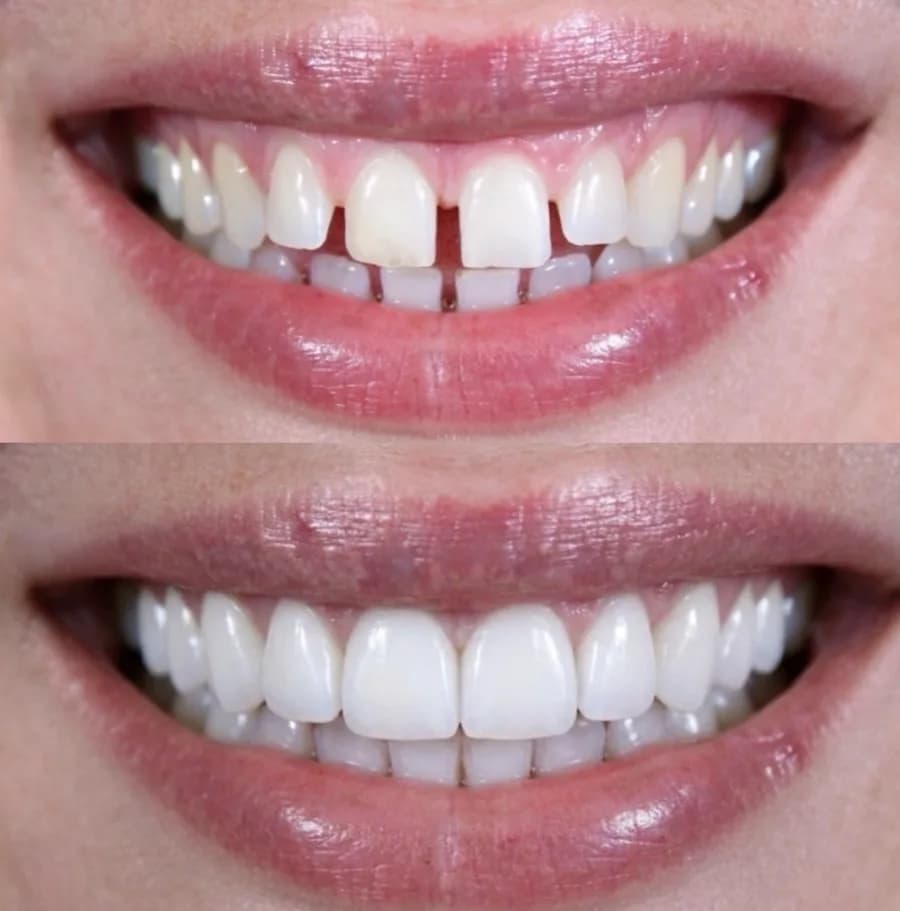
In every surgical or interventional procedure, results may vary from person to person. It is recommended that you obtain detailed advice from your dentist before the procedure.
All images are shared with the explicit consent of our patients.
See all resultsFrequently Asked Questions
Yes. For the crown to fit over the tooth, approximately 1–1.5 mm of substance needs to be removed from the outer surface of the tooth. This procedure is irreversible. If only a colour or minor shape correction is wanted, methods that do not remove, or remove less, tooth substance (bonding, prepless veneers, whitening) can be considered.
Zirconia is a ceramic that shows high resistance to chewing forces; without a metal substructure it can be used on back teeth and in bridges. However, biting hard objects, nail biting or teeth clenching can lead to fracture. No crown is unbreakable.
In metal-supported porcelain crowns, a grey line may form at the gum margin over time because of the metal substructure. As there is no metal substructure in zirconia, this appearance is not expected.
The crown itself does not decay. However, the boundary where the crown ends and the tooth begins can decay. For this reason, the use of floss or an interdental brush and regular check-ups directly determine the lifespan of the crown.
Hot-and-cold sensitivity that can last a few weeks may be seen after preparation; it is usually temporary. Rarely, inflammation develops in the tooth nerve and root canal treatment may be required.
It varies depending on oral care, gum health, the bite relationship and chewing habits. A definite duration cannot be guaranteed. The cleaning of the crown margin and regular dentist check-ups are the decisive factors.
One material is not superior to the other; they suit different conditions. E-max transmits light closer to that of a natural tooth, so it may be preferred in the front region. Zirconia has higher fracture resistance, so it can be used in the back region and in bridges. The decision is made according to the position of the tooth, the chewing force and any teeth-clenching habit.
Related treatments
The content on this site is for information only and does not replace a clinical examination. The suitability, duration and scope of treatment are determined after a clinical assessment.
This content was prepared by Dt. Mevlüt Yazıcı.
Request an appointment.
Fill in the form to request an appointment and we'll get back to you shortly. You can also call us directly or message us on WhatsApp.
Altes Diş Kliniği
Altunizade, Üsküdar, İstanbul
- PHONE+90 533 474 43 94
- EMAIL[email protected]
- ADDRESSAlperen İş Merkezi, Valide-i Atik Mahallesi, Altunizade, Nuhkuyusu Cd D:191/B, 34664 Üsküdar/İstanbul
- WORKING HOURSWeekdays 10:00–19:00 · Saturday 10:00–16:00 · Sunday closed