
IMPLANT AND SURGERY
Impacted Tooth Extraction
Controlled surgical removal of a tooth that cannot erupt
Provided at our clinic in Altunizade, Üsküdar (Istanbul).
IN SHORT
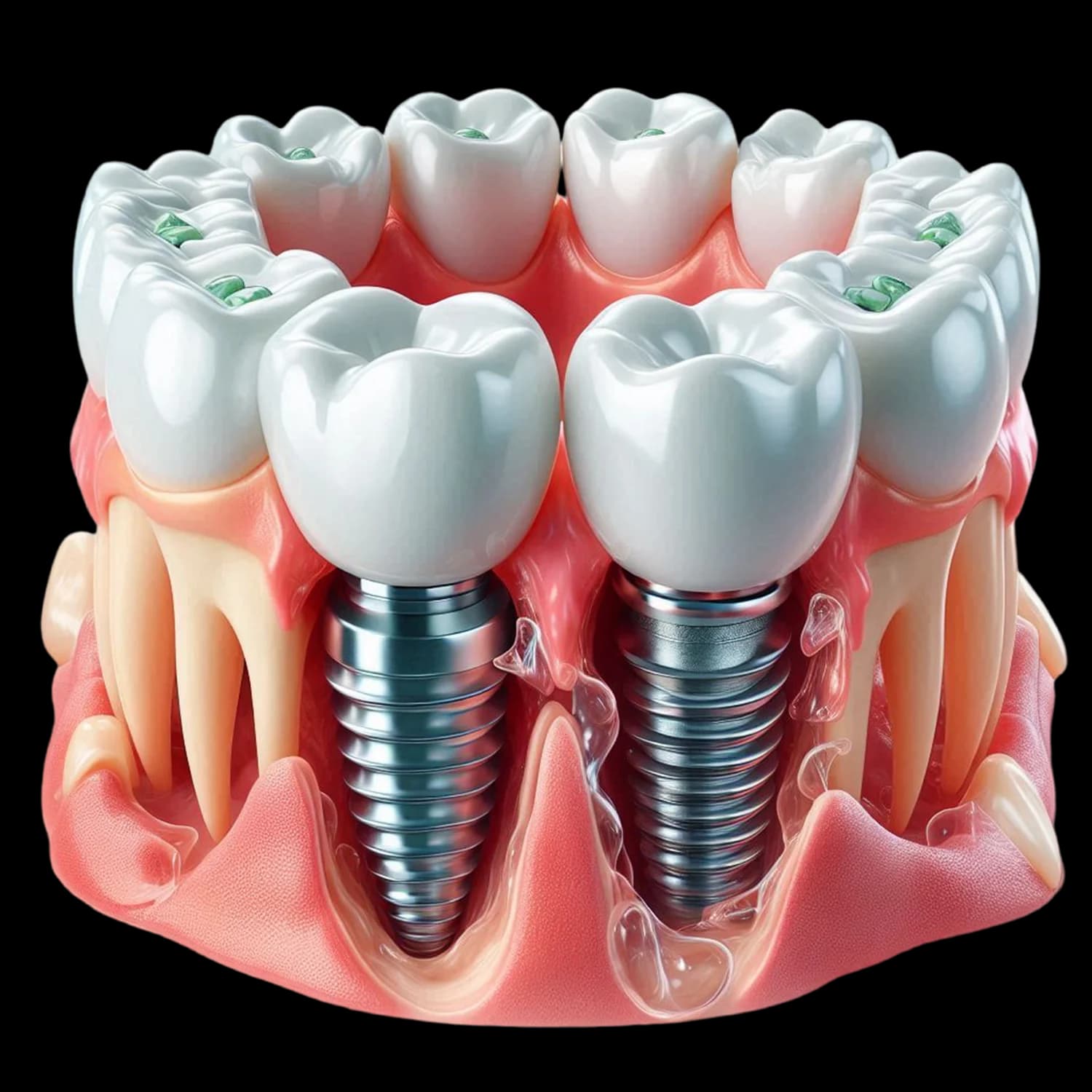
Impacted tooth extraction is the surgical removal of a tooth that remains within the gum or jawbone and cannot erupt normally. The procedure is based on reaching the gum over the tooth and, where necessary, a small amount of bone, so that the tooth is removed in a controlled way. Not every impacted tooth is extracted immediately; while some teeth that give no symptoms can be monitored, the removal of teeth that carry a risk of pain, infection or damage to the neighbouring tooth is recommended.
What is an impacted tooth and why does it form?
An impacted tooth is a tooth that, unable to come through in the place where it should erupt, remains partly or completely within the gum or jawbone. This is most often because there is not enough room where the tooth is due to erupt, or because the tooth is positioned at the wrong angle.
The most commonly impacted teeth are the wisdom teeth; however, the canines and some other teeth can also remain impacted. Impaction can occur to different degrees, from a superficial situation where the tooth stays only under the gum to a deep situation where it remains completely within the bone. Details specific to wisdom teeth are assessed separately.
A tooth being impacted does not on its own always mean a problem. What matters is whether the position of the tooth is causing, or carries a risk of causing, harm to the neighbouring teeth and tissues. For this reason the decision whether or not to extract an impacted tooth is made not simply because the tooth is impacted, but according to the situation it creates around it.
What problems can an impacted tooth cause?
Recurring gum inflammation and infection (pericoronitis) around a partially erupted tooth.
Pressing on the root of the neighbouring tooth and causing decay or root resorption.
The development of a cyst or similar formation around it.
Pressure and crowding in the tooth alignment.
The presence of these problems, or the risk of them developing, is decisive in the decision whether or not to extract the impacted tooth.
Especially in partially erupted teeth, the space that remains between the gum and the tooth forms an area that is difficult to clean and prepares the ground for recurring inflammation. Such recurring complaints can be a sign that the impacted tooth is not staying silent and that it needs to be assessed.
Is every impacted tooth extracted?
Not every impacted tooth needs to be extracted immediately; the decision is made according to the condition of the tooth and the risk it creates.
The removal of teeth that are causing, or carry a high risk of causing, a problem such as pain, infection, damage to the neighbouring tooth or a cyst is recommended.
Some impacted teeth that give no symptoms and carry a low risk of harm to the neighbouring tissues, on the other hand, can be monitored with regular check-ups.
The general state of health, any medication used and the anatomical position of the tooth affect the decision to extract and its timing.
The procedure step by step
Assessment
The position of the tooth and its relationship with the neighbouring structures are examined; in cases where it is deemed necessary, further imaging may be requested.
Anaesthesia
The procedure area is numbed with local anaesthesia.
Surgical access
The gum over the tooth and, where necessary, a small amount of bone are reached.
Removal
The tooth is removed in a controlled way, divided into parts where necessary.
Completion
The area is cleaned, sutures are placed and aftercare is explained.
After the procedure and healing
In the first days after impacted tooth extraction, swelling, mild pain and sometimes temporary difficulty in opening the jaw may occur; these are expected and usually decrease within a few days. Applying cold helps to reduce swelling.
On the first day soft and lukewarm foods are preferred; to protect the clot, vigorous rinsing, smoking and sucking movements should be avoided. If sutures have been placed, a check-up is carried out at the time indicated by the dentist. Maintaining oral hygiene without irritating the area supports healing.
The healing time varies according to the degree of impaction and the extent of the procedure. In a superficial impaction healing is faster, while after the extraction of a tooth that has remained completely within the bone, the recovery of the area may take a little longer. During this period no medication or application other than those given by the dentist should be used.
Risks and possible situations
Swelling, bruising and temporary difficulty in opening the jaw are common.
If the aftercare advice is not followed, infection or loss of the clot (dry socket) may develop in the area.
In the back region of the lower jaw the tooth may be positioned close to the nerve; in this case there may be a temporary, rarely permanent, change in sensation of the lip, tongue or chin. This risk is assessed before the procedure.
In the back region of the upper jaw, proximity to the sinus cavity is taken into account in the procedure plan.
A significant part of these risks can be reduced by carefully assessing, before the procedure, the position of the tooth and its relationship with the neighbouring structures. Possible situations and the measures to be taken against them are shared with the patient before the procedure.
Approach according to eruption status
The approach to an impacted tooth varies according to how far the tooth has erupted. The table below compares the path followed according to the eruption status.
Compare the options
| Prominent feature | Approach | |
|---|---|---|
| Fully erupted | Fully visible in the mouth | If needed, mostly a simple extraction |
| Partially impacted | Part of it remains under the gum | Surgical extraction often recommended because of the risk of inflammation |
| Fully impacted | Remains completely within the gum/bone | Surgical extraction or monitoring according to symptoms and risk |
Which option is suitable is decided together after an intraoral examination.
Frequently Asked Questions
Not every impacted tooth needs to be extracted immediately. If there is a risk of pain, infection or damage to the neighbouring tooth, extraction is recommended; teeth that give no symptoms and carry a low risk, on the other hand, can be monitored. The decision is made by examination.
As the area is numbed with local anaesthesia, no pain is felt during the procedure. The swelling and mild pain that can occur afterwards are managed with the dentist's advice.
The swelling and discomfort in the first days usually decrease within a few days. The full healing time varies according to the degree of impaction and the extent of the procedure.
Especially after the extraction of teeth that have remained within the bone, some swelling is an expected situation and usually subsides within a few days. Applying cold helps to reduce swelling.
Related treatments
The content on this site is for information only and does not replace a clinical examination. The suitability, duration and scope of treatment are determined after a clinical assessment.
This content was prepared by Dt. Mevlüt Yazıcı.
Request an appointment.
Fill in the form to request an appointment and we'll get back to you shortly. You can also call us directly or message us on WhatsApp.
Altes Diş Kliniği
Altunizade, Üsküdar, İstanbul
- PHONE+90 533 474 43 94
- EMAIL[email protected]
- ADDRESSAlperen İş Merkezi, Valide-i Atik Mahallesi, Altunizade, Nuhkuyusu Cd D:191/B, 34664 Üsküdar/İstanbul
- WORKING HOURSWeekdays 10:00–19:00 · Saturday 10:00–16:00 · Sunday closed