
AESTHETIC DENTISTRY
Porcelain Laminate (Veneer)
A thin porcelain layer bonded to the front surface of the tooth
Provided at our clinic in Altunizade, Üsküdar (Istanbul).
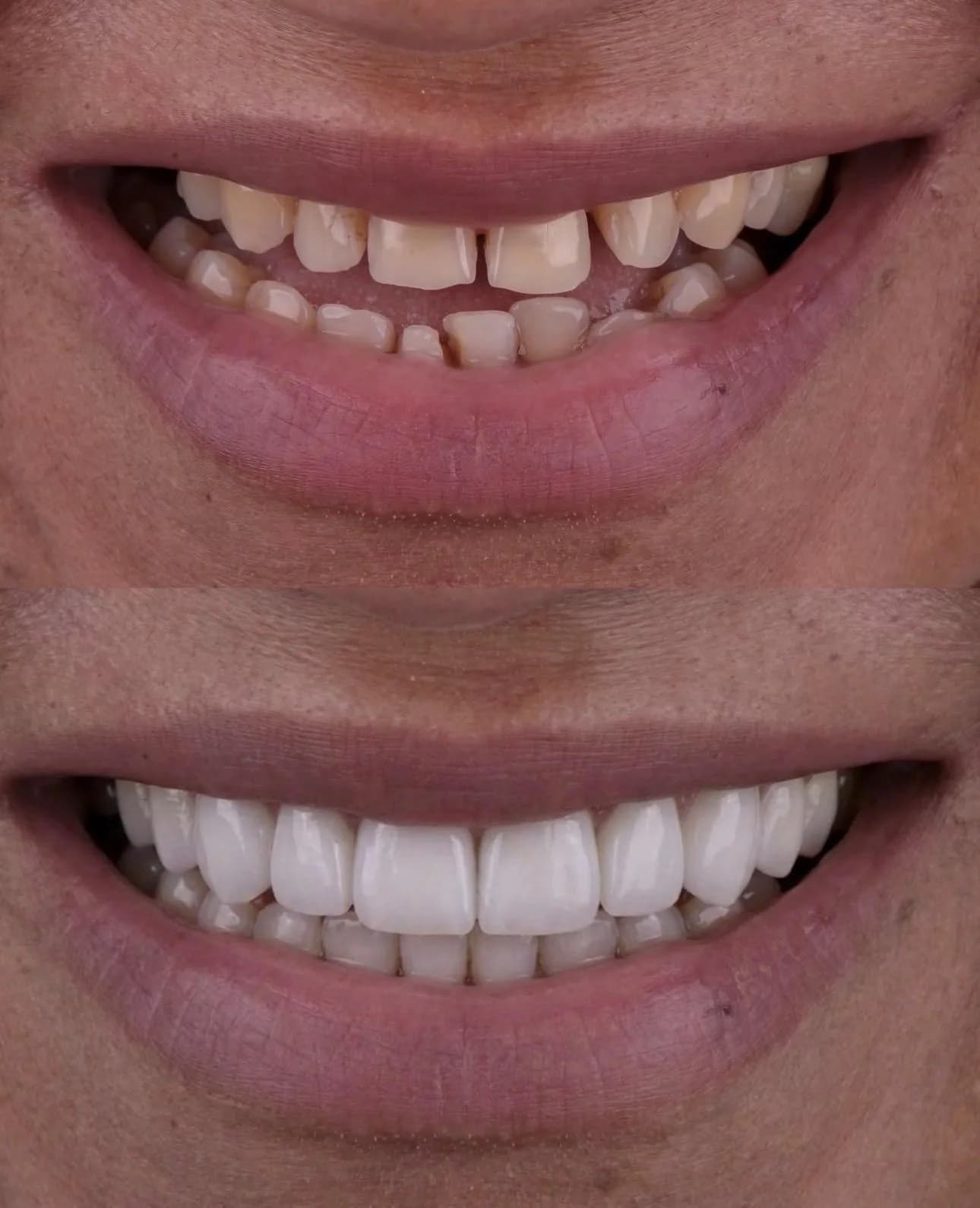
IN SHORT
A porcelain laminate is a thin porcelain layer, approximately 0.3–0.7 mm thick, bonded only to the front (visible) surface of the tooth. Its difference from a crown is that it covers only the front surface of the tooth rather than the whole tooth; for this reason less tooth tissue is removed. It is considered in situations such as colour, minor shape irregularities and gaps between teeth. It does not replace orthodontics in advanced crowding.
What is a porcelain laminate?
A laminate is a thin porcelain layer bonded to the front surface of the tooth. It can be likened to an artificial nail bonded onto a nail: the tooth stays in place and a thin surface is added on top.
In a crown, substance is removed from all surfaces of the tooth and the tooth is completely covered. In a laminate, on the other hand, substance is removed only from the front surface, in most cases between 0.3 and 0.7 mm. The back surface, the incisal edge and most of the tooth remain as they are.
The material of a laminate is porcelain. This porcelain can be of different types; one of the commonly used ones is lithium disilicate glass ceramic (widely known by the name E-max). The choice of material is made according to the condition of the tooth and the desired light transmission.
In which cases is it applied?
In permanent discolourations that do not respond to whitening (for example tetracycline staining or fluorosis)
In closing the gaps between teeth (diastema)
In minor shape and size irregularities
In fractures or wear that have formed on the incisal edge
In camouflaging mild alignment irregularities
It does not replace orthodontics
This is the most frequently misunderstood point about laminates and needs to be stated clearly.
A laminate changes the visible surface of the teeth; it does not change the position of the teeth within the jaw. Mild alignment irregularities can be camouflaged with a laminate. However, doing this in advanced crowding requires removing far more substance from the teeth — sometimes enough to reach the tooth nerve.
In advanced crowding the correct sequence is as follows: first the teeth are brought into the correct position with orthodontics (clear aligner or fixed braces treatment), then, if necessary, an aesthetic application is carried out. This lengthens the treatment time but preserves healthy tooth tissue.
Who is it not suitable for?
In those with a severe teeth-clenching or grinding habit. A laminate is a thin structure; it can fracture under high force. Treatment is not entirely ruled out, but the use of a night guard is required.
If there is advanced substance loss in the tooth. If insufficient enamel tissue remains for the laminate to bond to, a crown is considered.
In bite disorders such as an edge-to-edge or deep bite. The force placed on the incisal edges can fracture the laminate.
In the presence of untreated gum disease or active decay.
In habits such as nail biting or pen chewing.
In patients whose oral care is inadequate. The bonding line requires maintenance.
The application process step by step
Examination and planning
Gum health, the bite and the existing tooth tissue are assessed. If necessary, photographs and a digital scan are taken.
Digital planning and mock-up
The planned result is prepared digitally and tried in the mouth with a temporary material (mock-up). At this stage the result is seen and changes can be requested. The permanent procedure is not begun until the mock-up is approved.
Preparation
In cases where it is needed, a thin layer is removed from the front surface of the tooth. In some cases preparation may not be needed; this is called a prepless laminate and is assessed separately.
Impression and temporary
An impression is taken; if preparation has been done, a temporary laminate is fitted.
Trial
The prepared laminates are tried in the mouth; colour and form are checked.
Bonding
The laminates are bonded to the tooth with a special adhesive. This bond makes up an important part of the durability of the laminate.
Maintenance and lifespan
The porcelain surface is resistant to staining. However, discolouration may be seen over time along the bonding line between the laminate and the tooth. The cleaning of this line is the main factor determining the appearance of the laminate.
The use of floss and check-ups every six months are recommended. Biting hard objects should be avoided.
The usage period varies depending on oral care, the bite relationship and chewing habits. A definite duration cannot be guaranteed.
Risks and possible complications
If preparation has been done, the procedure is irreversible. This is why the mock-up stage is important before the decision.
Fracture. A laminate is a thin structure; biting hard objects, nail biting or teeth clenching can lead to fracture.
Debonding (separation of the bond). It can be re-bonded; in some cases the laminate needs to be renewed.
Sensitivity. In cases where preparation is done, hot-and-cold sensitivity may be seen for a while after the procedure.
Discolouration along the bonding line.
Gum recession. Over time, the margin of the laminate may become visible.
The difference between a laminate and a crown
These two applications are often confused. The difference is how much of the tooth is covered.
Compare the options
| Porcelain laminate | Crown | |
|---|---|---|
| Surface covered | Only the front surface of the tooth. | All surfaces of the tooth. |
| Tooth tissue removed | Approximately 0.3–0.7 mm, only from the front surface. In some cases no preparation is needed. | Approximately 1–1.5 mm, from all surfaces. |
| Area of application | Mainly the front region. | Front and back region. |
| Conditions applied in | Colour, minor shape irregularity, diastema, incisal-edge fracture. | Advanced substance loss, root-canal-treated tooth, bridge abutment. |
| Strength | Lower. Relies on the bonding connection. | Higher. |
| Reversibility | May be possible if no preparation has been done. | Not possible. |
Which option is suitable is decided together after an intraoral examination.
Before & after
Before-and-after images of some treatments carried out at our clinic. Results vary from person to person.
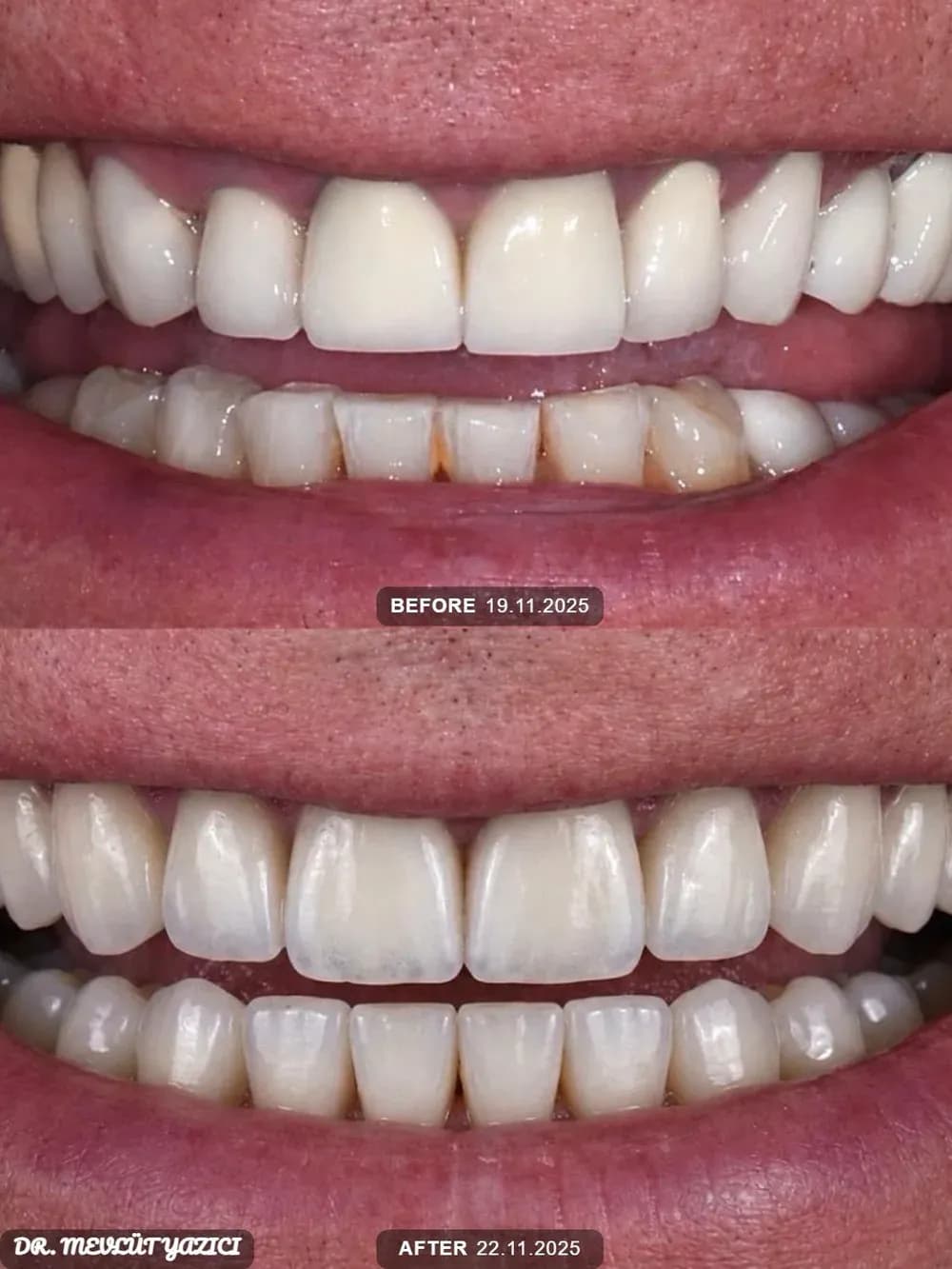
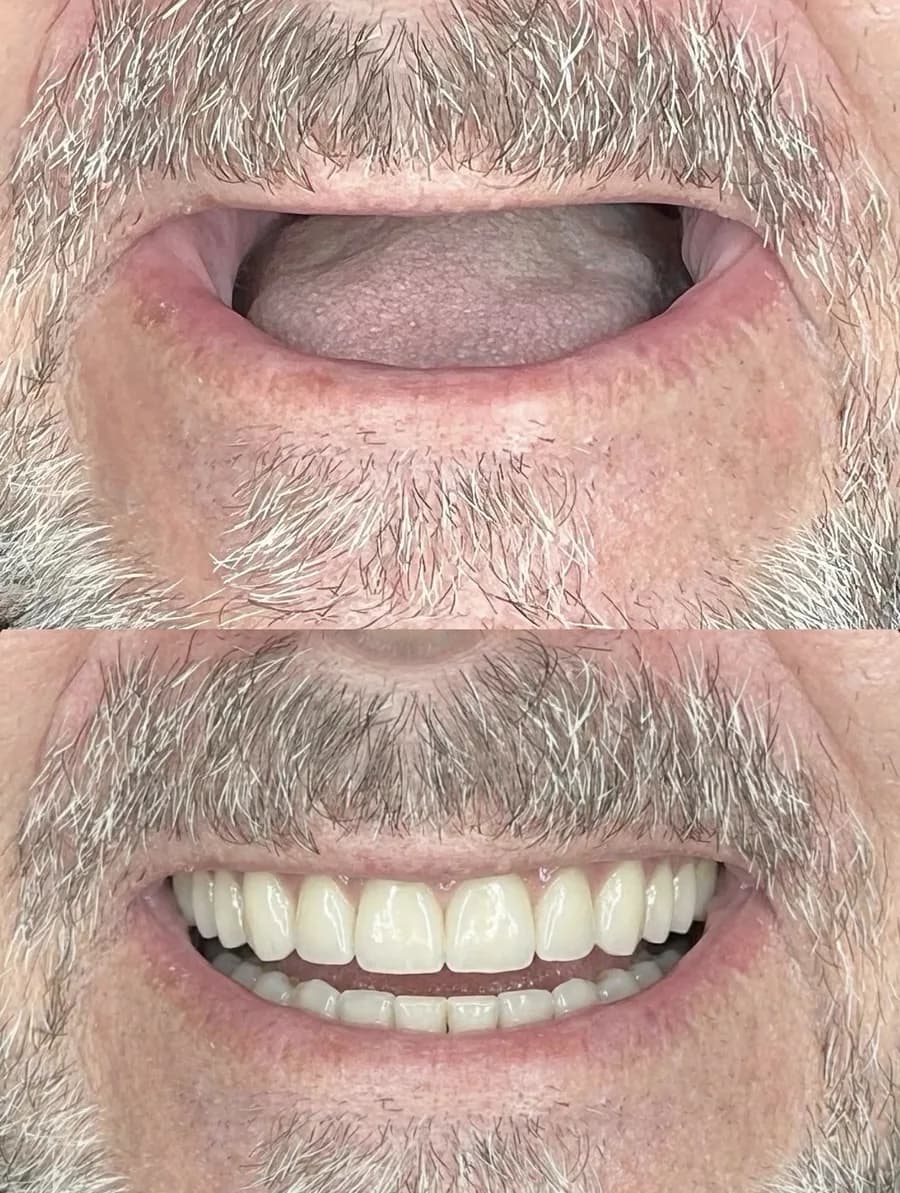
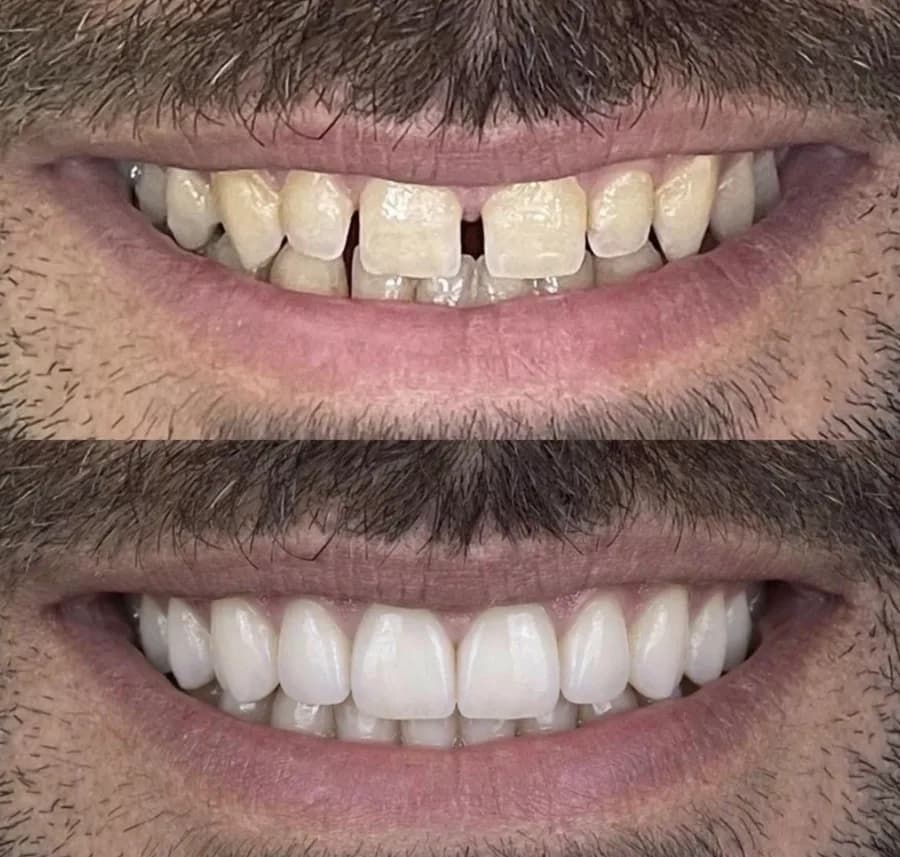
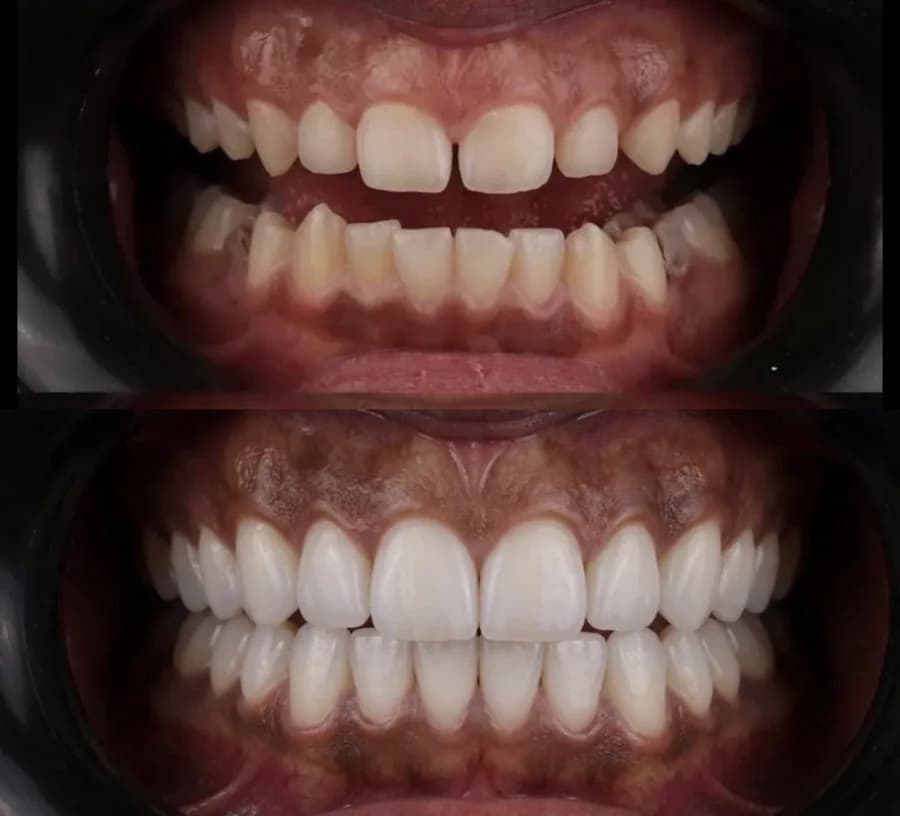
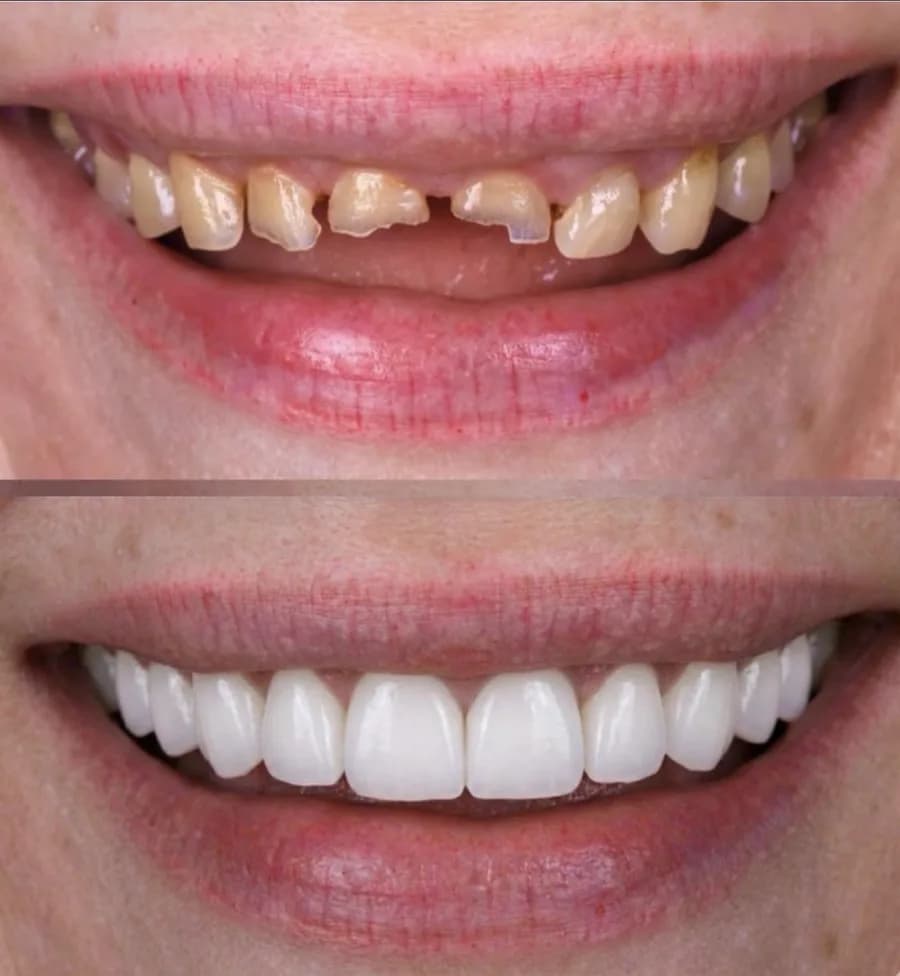
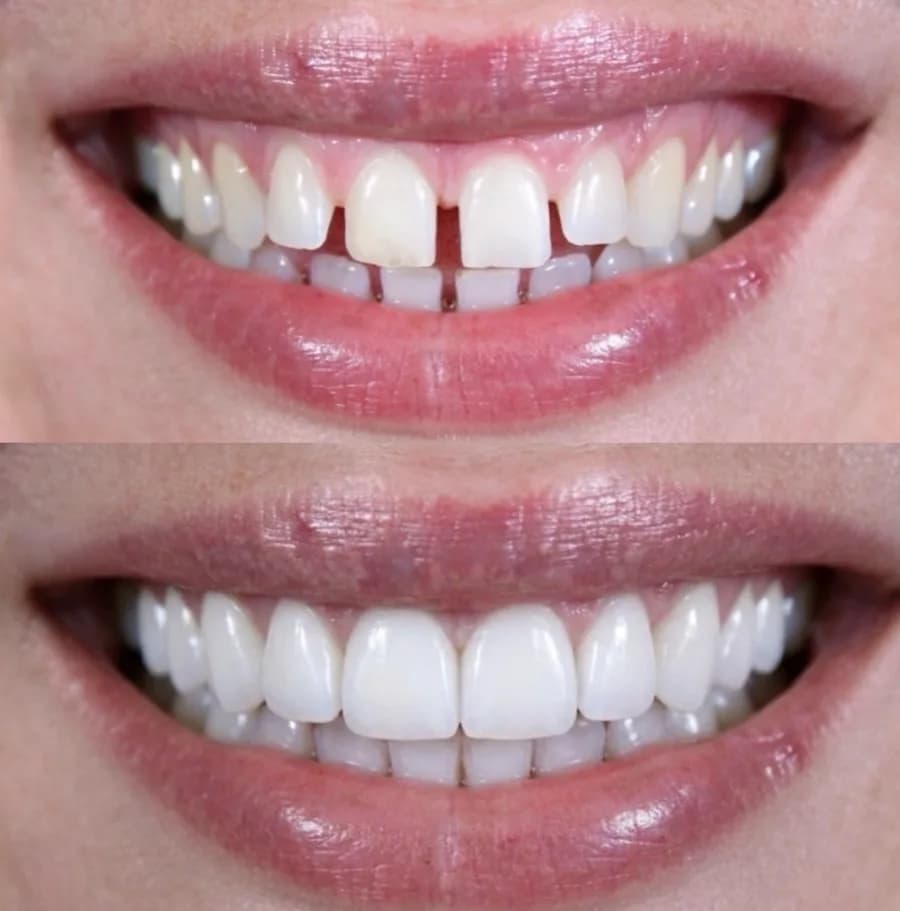
In every surgical or interventional procedure, results may vary from person to person. It is recommended that you obtain detailed advice from your dentist before the procedure.
All images are shared with the explicit consent of our patients.
See all resultsFrequently Asked Questions
In most cases a thin layer 0.3–0.7 mm thick is removed from the front surface of the tooth. In some cases preparation may not be needed; this is called a prepless laminate and cannot be applied to every tooth structure. Which method is suitable is determined according to the current position and shape of the tooth.
In cases where preparation is done, because substance has been removed from the tooth, returning is not possible. In prepless applications a return may be possible. This distinction should be discussed clearly before the treatment decision.
A laminate changes the visible surface of the teeth; it does not change their position within the jaw. Mild alignment irregularities can be camouflaged. Doing this in advanced crowding requires removing a great deal of tooth tissue. In this case orthodontics (clear aligner or fixed braces treatment) is recommended first, then an aesthetic application if necessary. A laminate does not replace orthodontics.
Laminates are thin structures. Biting hard objects, nail biting, chewing a pen or teeth clenching can lead to fracture. In patients with a teeth-clenching habit, the use of a night guard is recommended.
The porcelain surface is resistant to staining and does not change colour. However, discolouration may be seen over time along the bonding line between the laminate and the tooth. The cleaning of this line is important.
Yes. In the mock-up stage, the planned result is tried in the mouth with a temporary material. Before moving on to the permanent procedure, the result is seen and changes can be requested.
This is determined according to the number of teeth visible when smiling. Applying it to only a few teeth can lead to a colour mismatch with the neighbouring teeth. For this reason, planning is done over the whole smile rather than a single tooth.
Related treatments
The content on this site is for information only and does not replace a clinical examination. The suitability, duration and scope of treatment are determined after a clinical assessment.
This content was prepared by Dt. Mevlüt Yazıcı.
Request an appointment.
Fill in the form to request an appointment and we'll get back to you shortly. You can also call us directly or message us on WhatsApp.
Altes Diş Kliniği
Altunizade, Üsküdar, İstanbul
- PHONE+90 533 474 43 94
- EMAIL[email protected]
- ADDRESSAlperen İş Merkezi, Valide-i Atik Mahallesi, Altunizade, Nuhkuyusu Cd D:191/B, 34664 Üsküdar/İstanbul
- WORKING HOURSWeekdays 10:00–19:00 · Saturday 10:00–16:00 · Sunday closed