
GENERAL DENTAL TREATMENTS
Dental Scaling
Care that removes hardened deposits and protects the gum
Provided at our clinic in Altunizade, Üsküdar (Istanbul).
IN SHORT
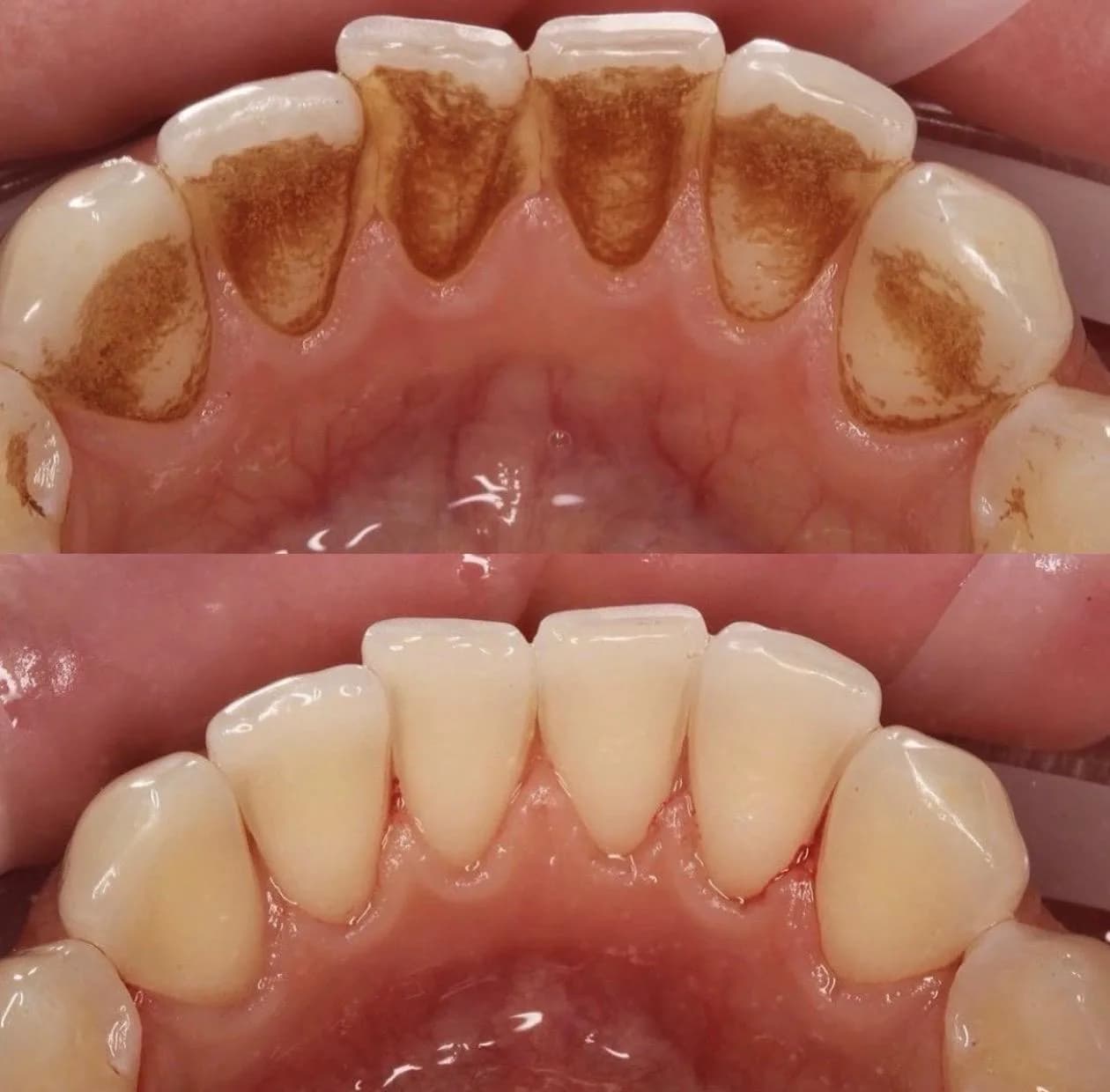
Dental scaling is the removal of the plaque and mineral deposits that harden and build up on the tooth surface and at the gum line. The procedure is based on breaking up and cleaning the deposits with ultrasonic vibration and hand instruments and then polishing the surface. Dental scaling is not a whitening method; it removes deposits and surface stains but does not change the natural colour of the tooth.
What is tartar, and why is it cleaned?
The bacteria in the mouth combine with saliva and food residues to form a soft, sticky layer on the tooth surface called plaque. Plaque can be removed by regular brushing and the use of dental floss. When it is not removed, it hardens with the minerals in the saliva and turns into tartar.
Tartar has a hard structure and cannot be removed with a brush; because its surface is rough, it makes it easier for more plaque to accumulate on it. These deposits that build up at and below the gum line are the main cause of gum inflammation. Dental scaling is carried out to break this cycle and to protect the gum tissue.
Tartar accumulates in two areas: above the gum line (supragingival) and below the gum line (subgingival). The deposit above the gum is visible and easier to remove. The deposit below the gum is not directly visible, develops in the gum pocket and causes more problems. For this reason, the scope of the cleaning is determined by where the deposit is and how much of it there is.
Who is it applied to, and how often is it needed?
Dental scaling is a care procedure needed at certain intervals by most people even when oral care is regular, because in the areas near the salivary glands deposits cannot be completely prevented by brushing. The interval needed varies from person to person and is determined by a dental examination.
People with bleeding, redness or tenderness of the gums may need to be assessed more often.
In people who smoke and those with a history of gum disease, deposits can form more quickly.
In people with orthodontic braces or a fixed prosthesis, cleaning is more difficult, so the intervals may differ.
During pregnancy the gum tissue becomes more sensitive to hormonal changes and the tendency to inflammation increases; in this period dental scaling can usually be applied safely, but the timing is planned together with the dentist. In children, the need and frequency are assessed according to the oral care and the condition of the gums.
Who is it not suitable for, and in which cases are additional precautions needed?
An absolute contraindication to dental scaling is rare, but in some situations additional assessment or precaution is needed before the procedure. For this reason the general state of health and the medications used should be told to the dentist before the examination.
In people with certain heart-valve diseases, a prosthetic heart valve or a history of infective endocarditis, an antibiotic precaution (prophylaxis) may be needed before the procedure; this decision is made by the dentist.
In people using blood-thinning medication and those with a bleeding disorder, the treatment plan is arranged accordingly.
If there is an active and painful infection in the mouth, this condition may need to be assessed first.
How is the procedure carried out step by step?
Examination
The teeth and gums are assessed; the amount of deposit and the condition of the gum are determined.
Cleaning above the gum
The tartar above the gum line (supragingival) is removed with an ultrasonic instrument and hand instruments.
Cleaning below the gum
In the areas judged necessary, the deposits just below the gum line are cleaned.
Polishing
The tooth surface is polished to reduce roughness; this helps new deposits to form more slowly.
Instruction
The brushing and flossing technique to be applied at home is explained.
Number of sessions
The procedure is most often completed in a single session. If the deposit is dense below the gum line and gum disease has progressed, the procedure may be spread over more than one session within gum treatment.
After the procedure and healing
After the cleaning, a mild cold-and-hot sensitivity that can last a few days and a temporary tenderness of the gums may be seen; this usually passes on its own. In inflamed gums there may be short-term mild bleeding after the procedure.
In mouths that have not been cleaned for a long time, when the inflammation-related swelling decreases it may be noticed that the gaps between the teeth appear more open. This does not mean that the procedure has made the gum recede; it is the true condition of the tissue emerging as the swelling goes down.
Risks and common misconceptions
Dental scaling is a low-risk procedure. Possible situations are limited to temporary sensitivity and mild gum bleeding.
“Dental scaling abrades the teeth and opens gaps between them” is a common belief, but it is not true. The procedure is not carried out to abrade the enamel but to remove the hardened deposit stuck to the enamel. The gap between the teeth comes from prior gum loss that the tartar itself had already caused, not from the cleaning.
Dental scaling is not a whitening procedure. It can reduce surface stains from tea, coffee and cigarettes; however, it does not change the structural colour of the tooth. A change in colour is a separate matter and requires a different method.
The difference between home care and professional cleaning
The two approaches do not replace each other; regular home care slows down new deposits, while professional cleaning removes the hardened deposit that has already formed. The table below compares the two.
Compare the options
| Home care (brush + floss) | Professional dental scaling | |
|---|---|---|
| What it removes | Soft plaque and food residues | Hardened tartar and surface stains |
| Effect on hardened tartar | Ineffective; hard tartar is not removed with a brush | Removes it with ultrasonic and hand instruments |
| Below the gum line | Cannot reach | Can be reached in the necessary areas |
| Frequency | Daily | At the intervals determined by the dentist |
| Purpose | To prevent new plaque forming | To clean accumulated tartar and protect the gum |
Which option is suitable is decided together after an intraoral examination.
Frequently Asked Questions
The procedure is usually carried out without discomfort. If the gums are inflamed or the deposit below the gum line is dense there may be sensitivity; in this case local anaesthesia can be applied and no pain is felt during the procedure.
Cold-and-hot sensitivity that can last a few days is an expected situation and usually decreases on its own. If it lasts a long time or increases, a dental assessment is needed.
There is no fixed rule. The interval needed varies according to the condition of the gums, the rate of deposit formation, smoking and general oral care, and is determined as a result of the examination.
No. The cleaning can make the natural colour of the tooth more visible by reducing the surface stains left by tea, coffee and cigarettes; however, it does not lighten the structural colour of the tooth. Lightening the colour is a separate procedure.
Related treatments
The content on this site is for information only and does not replace a clinical examination. The suitability, duration and scope of treatment are determined after a clinical assessment.
This content was prepared by Dt. Mevlüt Yazıcı.
Request an appointment.
Fill in the form to request an appointment and we'll get back to you shortly. You can also call us directly or message us on WhatsApp.
Altes Diş Kliniği
Altunizade, Üsküdar, İstanbul
- PHONE+90 533 474 43 94
- EMAIL[email protected]
- ADDRESSAlperen İş Merkezi, Valide-i Atik Mahallesi, Altunizade, Nuhkuyusu Cd D:191/B, 34664 Üsküdar/İstanbul
- WORKING HOURSWeekdays 10:00–19:00 · Saturday 10:00–16:00 · Sunday closed