
GENERAL DENTAL TREATMENTS
Dental Filling
A repair that stops decay and restores the function of the tooth
Provided at our clinic in Altunizade, Üsküdar (Istanbul).
IN SHORT
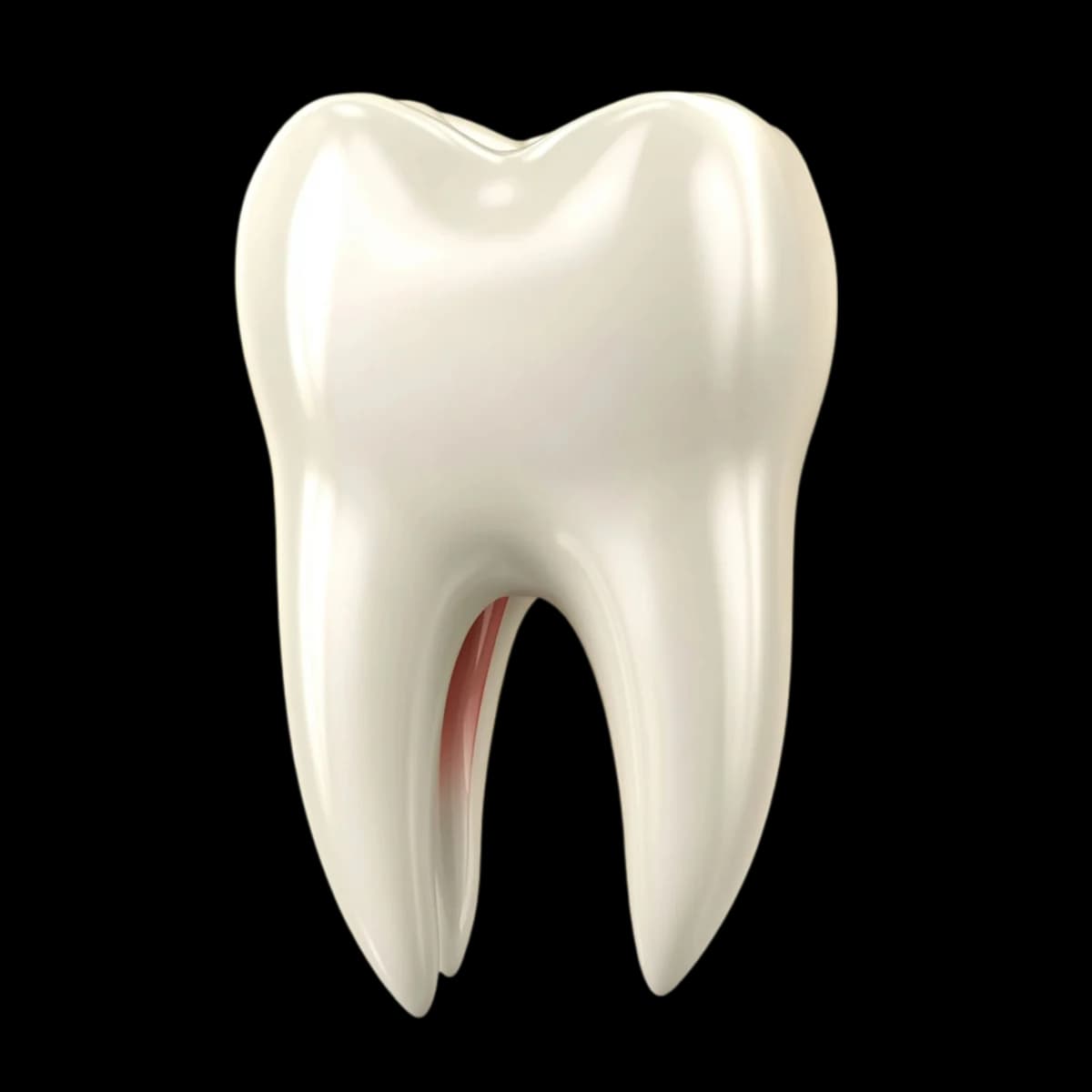
In filling treatment, the decayed tooth tissue is cleaned and the resulting cavity is filled with a filling material. The aim is to stop the decay from progressing and to restore the shape of the tooth and its chewing function. If the decay has not reached the nerve of the tooth (the pulp), a filling is sufficient; if it has, root canal treatment is needed. If the substance loss is too great, a filling will not hold; in that case an inlay, onlay or crown is considered.
How does decay form?
The bacteria in the mouth use the sugars in food to produce acid. This acid dissolves the mineral on the tooth surface. At first the process is slow and reversible; saliva and fluoride can partly replace the lost mineral.
However, once the mineral loss passes a certain threshold, a cavity forms on the surface. Beyond this point the decay does not stop on its own and does not reverse. The cavity has to be cleaned and filled.
In which cases is a filling done?
In cavities that have formed as a result of decay
In the repair of fractured or worn teeth
In renewing old fillings that leak at the margin or are fractured
On root surfaces that have become exposed and worn as a result of gum recession
When is a filling not enough?
This is the most important section of the page. A filling is not the solution to every case of decay.
If the decay has reached the pulp (the nerve and vascular tissue of the tooth). In this case, even if a filling is placed, the pain continues and the inflammation progresses. Root canal treatment is needed.
If the substance loss is very extensive. A filling relies on the healthy tooth tissue around it. If this tissue is insufficient, the filling will fracture or fall out over time. In this case an inlay, onlay or crown is considered.
If the cusp structure of the tooth (the peak on the chewing surface) has fractured.
Placing large fillings on a tooth again and again is an approach that weakens the tooth. Once the substance loss passes a certain threshold, moving to a restoration that wraps around the tooth (an onlay or crown), rather than enlarging the filling, extends the life of the tooth.
Amalgam (silver) fillings and the question of mercury
This question is often asked by patients and needs to be answered honestly.
Amalgam fillings contain mercury. However, within amalgam the mercury has formed a compound with other metals; it does not behave like free mercury. The world health authorities report that there is no evidence that amalgam fillings in the mouth cause health problems in adults.
On the other hand, because of environmental mercury release, the use of amalgam is being gradually restricted in many countries. There are restrictions on its use in pregnant and breastfeeding women and in children.
The practical conclusion: it is not recommended to remove a sound, problem-free amalgam filling that is present in the mouth purely out of concern about mercury. The exposure to mercury vapour produced during removal is higher than that of leaving the filling in the mouth. A filling is renewed only when it fractures, leaks at the margin or develops decay beneath it.
The application process step by step
Examination and X-ray
The depth of the decay and its closeness to the pulp are assessed.
Anaesthesia
This may be needed depending on the depth. It may not be needed in superficial decay.
Cleaning the decay
Only the decayed tissue is removed; the healthy tissue is preserved.
Isolation
The area is insulated from saliva. For a composite filling to bond to the tooth, the surface has to be dry. If this step is skipped, the filling does not hold.
Placing the filling
Composite fillings are placed layer by layer and each layer is hardened with light.
Bite check
A filling left too high leads to pain on chewing and to the filling fracturing.
Shaping and polishing
A rough surface holds plaque and prepares the ground for new decay.
Sensitivity after the procedure
Hot-and-cold sensitivity lasting from a few days to a few weeks after a filling is an expected situation, especially in deep fillings. It usually resolves on its own.
However, the following signs are not expected and should be reported: pain that arises on its own, pain that wakes you from sleep at night, pain that lasts for minutes after a cold or hot stimulus is removed, marked pain on chewing. These may indicate that the pulp is affected and root canal treatment may be needed.
Risks and possible complications
In deep decay, the pulp may be reached while the decay is being cleaned. In this case root canal treatment is needed.
Sensitivity after the procedure.
Fracture or loss of the filling. Especially in large fillings and in patients with a teeth-clenching habit.
Marginal leakage. As a result of bacteria leaking from the boundary between the filling and the tooth, new decay (secondary decay) can develop beneath the filling. For this reason regular check-ups are important.
Marginal discolouration over time in composite fillings.
Lifespan
The usage period of a filling varies depending on the size of the filling, its position, oral care, dietary habits and any teeth-clenching habit. A definite duration cannot be guaranteed. No filling is permanent; it needs to be renewed over time.
Filling materials
Different materials are used for fillings; each is suitable for a different type of cavity and position. The table below compares the measurable properties of three commonly used options.
Compare the options
| Composite | Amalgam | Inlay / Onlay | |
|---|---|---|---|
| Appearance | Tooth-coloured. | Silver-grey. | Tooth-coloured. |
| Where it is made | In the mouth, in a single session. | In the mouth, in a single session. | In a laboratory; two sessions. |
| Tissue removed | Less. | More; a special shape is given for retention. | Only as much as the cavity requires. |
| Bond to the tooth | Bonds chemically. | Does not bond; held mechanically. | Bonds chemically. |
| Suitable cavity | Small and medium size. | Medium and large size. | Large; cases where a filling is not enough. |
| Fracture resistance | Medium. | High. | High. |
| Marginal leakage | May be seen over time. | May be seen over time. | Less. |
Which option is suitable is decided together after an intraoral examination.
Frequently Asked Questions
The procedure is carried out under local anaesthesia and no pain is felt. In superficial decay anaesthesia may not be needed. Hot-and-cold sensitivity lasting from a few days to a few weeks after the procedure is an expected situation.
Amalgam contains mercury, but the mercury is in a compound form and does not behave like free mercury. The world health authorities report that there is no evidence that amalgam fillings in the mouth cause health problems in adults. For environmental reasons, the use of amalgam is being gradually restricted in many countries. It is not recommended to remove a sound, problem-free amalgam filling present in the mouth purely out of concern about mercury; the exposure produced during removal is higher than that of leaving the filling in the mouth. A filling is renewed only when it fractures, leaks or develops decay beneath it.
Hot-and-cold sensitivity lasting from a few days to a few weeks is an expected situation. However, pain that arises on its own, pain that wakes you from sleep at night or pain that lasts for minutes after the stimulus is removed is not expected and should be reported; it may indicate that the pulp is affected.
It varies depending on the size of the filling, its position, oral care and any teeth-clenching habit. A definite duration cannot be guaranteed. No filling is permanent; it needs to be renewed over time.
Yes. As a result of bacteria leaking from the boundary between the filling and the tooth, new decay can develop beneath the filling (secondary decay). This usually progresses without pain and is seen on an X-ray. Regular check-ups are important for this reason.
Yes. Decay usually does not cause pain until it comes close to the pulp. Pain is a sign that the decay has progressed; its absence does not mean there is no decay. A filling done in the early stage prevents the root canal treatment that would be needed at a later stage.
It depends on the extent of the substance loss. A filling relies on the healthy tooth tissue around it; if this tissue is insufficient, the filling fractures or falls out over time. In this case an inlay, onlay or crown is considered. Placing large fillings on a tooth again and again weakens the tooth.
Related treatments
The content on this site is for information only and does not replace a clinical examination. The suitability, duration and scope of treatment are determined after a clinical assessment.
This content was prepared by Dt. Mevlüt Yazıcı.
Request an appointment.
Fill in the form to request an appointment and we'll get back to you shortly. You can also call us directly or message us on WhatsApp.
Altes Diş Kliniği
Altunizade, Üsküdar, İstanbul
- PHONE+90 533 474 43 94
- EMAIL[email protected]
- ADDRESSAlperen İş Merkezi, Valide-i Atik Mahallesi, Altunizade, Nuhkuyusu Cd D:191/B, 34664 Üsküdar/İstanbul
- WORKING HOURSWeekdays 10:00–19:00 · Saturday 10:00–16:00 · Sunday closed