
IMPLANTS AND SURGERY
All-on-4 Implant Treatment
A fixed full-arch prosthesis on four implants
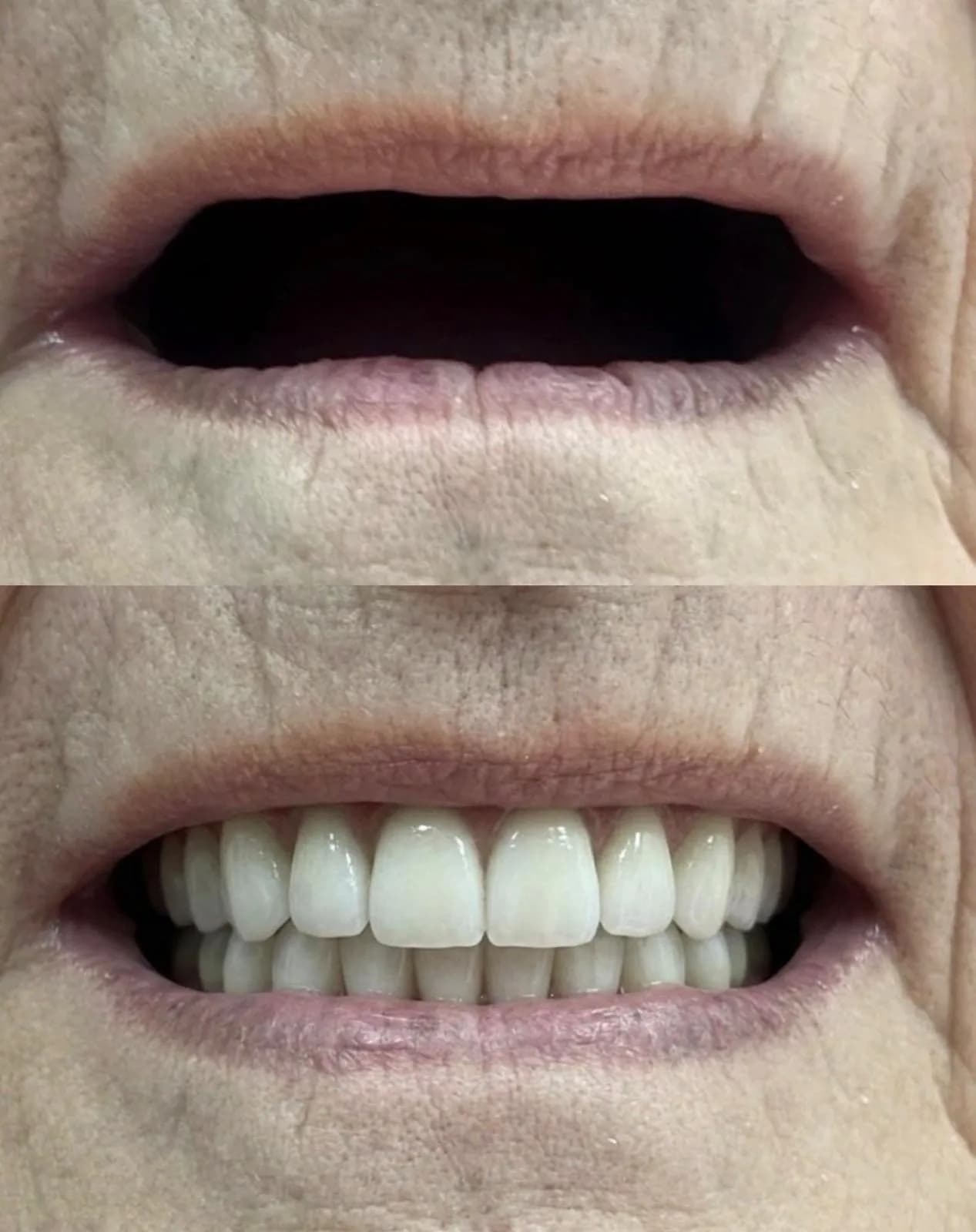
IN SHORT
All-on-4 is a treatment method in which all the teeth in a single jaw are completed with a prosthesis fixed onto four implants. The two implants at the back are placed at an angle so that they can reach the area where the bone is denser. This means that many patients do not need a bone graft or a sinus lifting procedure. In suitable cases, the prosthesis can be fitted shortly after surgery.
What is All-on-4 treatment?
When all the teeth in a jaw are lost or all of them need to be extracted, it is not necessary to place a separate implant for each lost tooth. In the All-on-4 method, four implants are placed in the jaw, and a fixed prosthesis carrying all the teeth is screwed onto these four implants.
The two implants at the front are placed perpendicular to the jawbone. The two implants at the back are placed at an angle of approximately 30–45 degrees. There are two reasons for this angulation: to allow the implant to reach the area where the bone is denser, and to stay away from the sinus cavity in the upper jaw and from the area of the lower jaw nerve in the lower jaw.
Angled placement also increases the distance between the points on which the prosthesis rests. With four implants, a support surface close to that obtained with more implants can be created.
Who can it be applied to?
All-on-4 is a method that may be considered in the following situations:
If all the teeth in a jaw have been lost
If all the existing teeth need to be extracted (advanced gum disease, numerous fractured or decayed teeth)
If a removable full denture is used but the denture moves, causes sore spots or is inadequate for chewing
If the bone volume is not sufficient to place implants throughout the whole jaw, but there is enough bone in the front region
Suitability is determined following an intraoral examination and an X-ray assessment of the bone condition and the anatomical structures.
Who is it not suitable for? In which cases is further assessment needed?
All-on-4 is not a method that can be applied to every patient. In the following situations, the treatment either cannot be applied or requires further assessment and preparation:
Absence of the bone volume needed to carry the implant in the front region. In this case a bone graft may be required, or a different treatment plan is considered.
Uncontrolled diabetes. Surgery is not planned before blood sugar is regulated; the HbA1c value is assessed.
Heavy smoking. Smoking adversely affects the fusion of the implant to the bone and increases the risk of implant loss.
Use of bisphosphonate-derivative medicines used in the treatment of bone loss, or a history of radiotherapy to the jaw region. In these situations, an assessment must be made together with your dentist and the relevant specialist.
Untreated gum disease or active infection in the mouth. These conditions must be resolved before surgery.
A severe teeth-clenching or grinding habit. In this case, providing support with more implants or the use of a night guard is considered.
Young patients whose jaw development is not complete.
If the examination indicates that All-on-4 is not suitable, this is stated clearly and any alternative options are explained.
The treatment process step by step
Examination and imaging
An intraoral examination is carried out; the bone condition and anatomical structures (sinus cavity, lower jaw nerve) are assessed with an X-ray.
Planning
The placement angle and depth of the implants are planned. If there are teeth that need to be extracted, this is determined at this stage.
Surgery
The procedure is carried out under local anaesthesia. In patients with a high level of anxiety, the treatment sessions can be divided and breaks can be taken. Teeth that need to be extracted are removed, and four implants are placed in the planned positions.
Temporary prosthesis
In suitable cases, if the initial stability of the implants is sufficient, a temporary fixed prosthesis can be fitted shortly after surgery. This is not possible in every patient; it depends on the initial anchorage value of the implants within the bone.
Healing
The fusion of the implants to the bone (osseointegration) usually takes 3–6 months. A temporary prosthesis is used during this period.
Permanent prosthesis
Once fusion is complete, an impression is taken and the permanent prosthesis is prepared and screwed onto the implants.
The healing process and points to consider
In the first days after surgery, swelling, bruising and tenderness are expected findings. Swelling usually subsides within 3–5 days.
The most important rule during the healing period is nutrition. Until the implants fuse to the bone, the force placed on the temporary prosthesis must be kept limited. For this reason, a soft diet is usually continued for 6–8 weeks. Biting on hard objects is one of the most common causes of implant loss during this period.
Smoking directly affects implant success throughout the healing period. It is recommended that it be stopped or minimised during this period.
Cleaning the area beneath the fixed prosthesis is different from normal toothbrushing. An oral irrigator (water jet) and interdental brushes need to be used. If this habit is not acquired, inflammation around the implant (peri-implantitis) may develop.
Risks and possible complications
As with any surgical procedure, there are risks in All-on-4 treatment too. Being aware of these is important for making an informed treatment decision.
Failure of the implant to fuse to the bone. The implant may be lost and may need to be replaced.
Peri-implantitis. This is inflammation of the tissues around the implant. If it progresses, it can lead to bone loss and implant loss. Oral care and regular check-ups reduce this risk.
Nerve damage. In the lower jaw, numbness or tingling may develop in the area close to the lower jaw nerve. X-ray assessment and digital planning are carried out to reduce this risk.
Sinus perforation. It may occur in the upper jaw in the area close to the sinus cavity.
Prosthesis fracture or screw loosening. It may be seen especially in patients with a teeth-clenching habit.
Temporary change in speech. It may last a few weeks during the period of adapting to the new prosthesis.
The difference between All-on-4 and All-on-6
Both methods serve the same purpose: completing all the teeth in a single jaw with a fixed prosthesis. The difference is the number of implants used and the conditions this brings.
Which method is suitable is determined by assessing the bone volume and density, jaw size, the condition of the teeth in the opposing jaw and any teeth-clenching habit. More implants do not always mean a better result; if there is no bone in which to place an implant, it is not possible to increase the number of implants.
Compare the options
| All-on-4 | All-on-6 | |
|---|---|---|
| Number of implants | 4 | 6 |
| Bone requirement | Less. Can be applied if there is enough bone in the front region. | More. Sufficient bone volume is also required in the back region. |
| Graft requirement | Not required in many cases. | A graft may be required if the bone is insufficient. |
| Force distribution | Distributed to four points. | Distributed to six points; the load on each implant is lower. |
| Teeth-clenching habit | Requires further assessment. | Can be considered because of the force distribution. |
| If one implant is lost | The support of the prosthesis is significantly affected. | The remaining implants can provide temporary support. |
| Surgery duration | Shorter. | Longer. |
Which option is suitable is decided together after an intraoral examination.
Before & after
Before-and-after images of some treatments carried out at our clinic. Results vary from person to person.
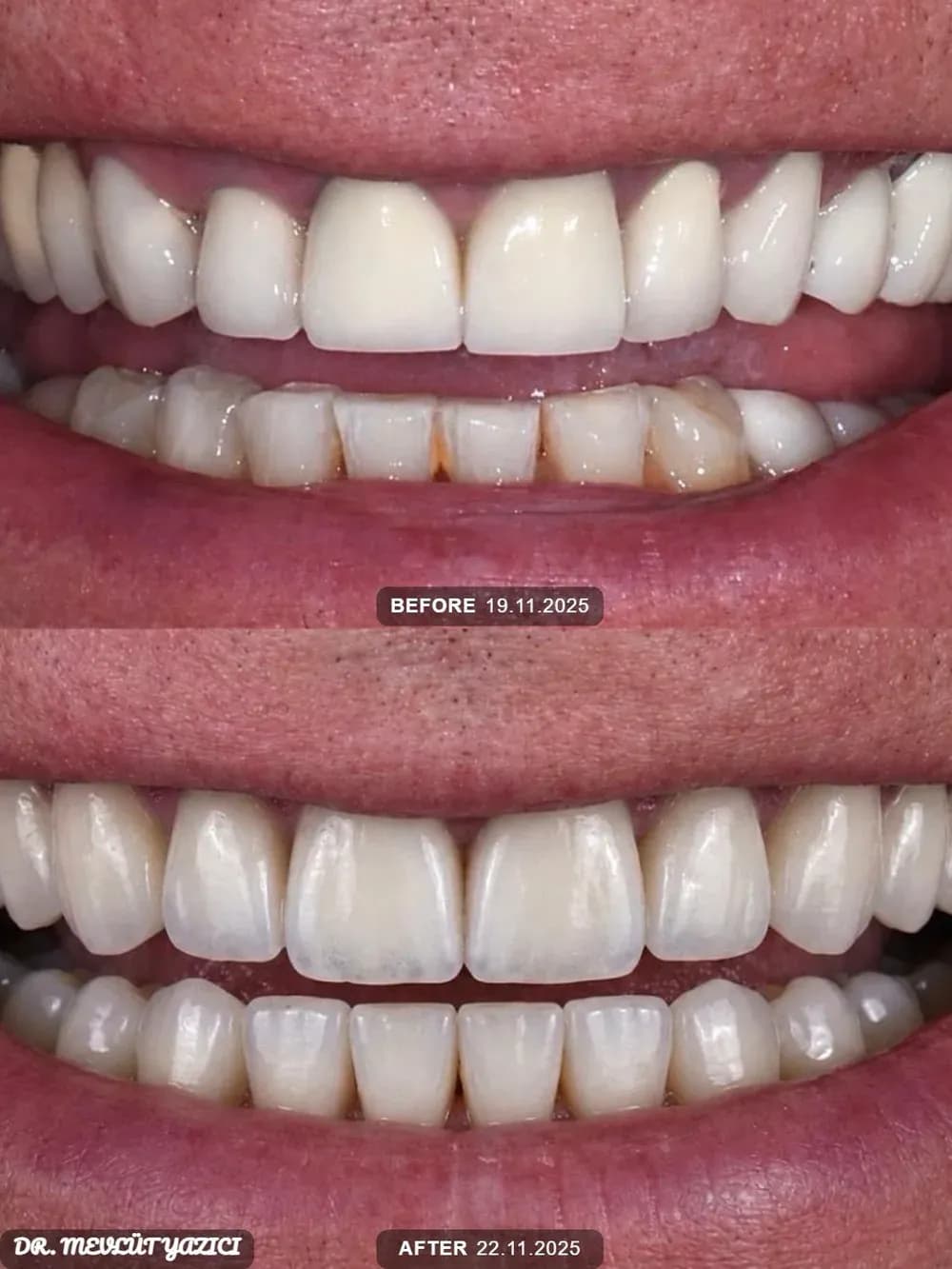
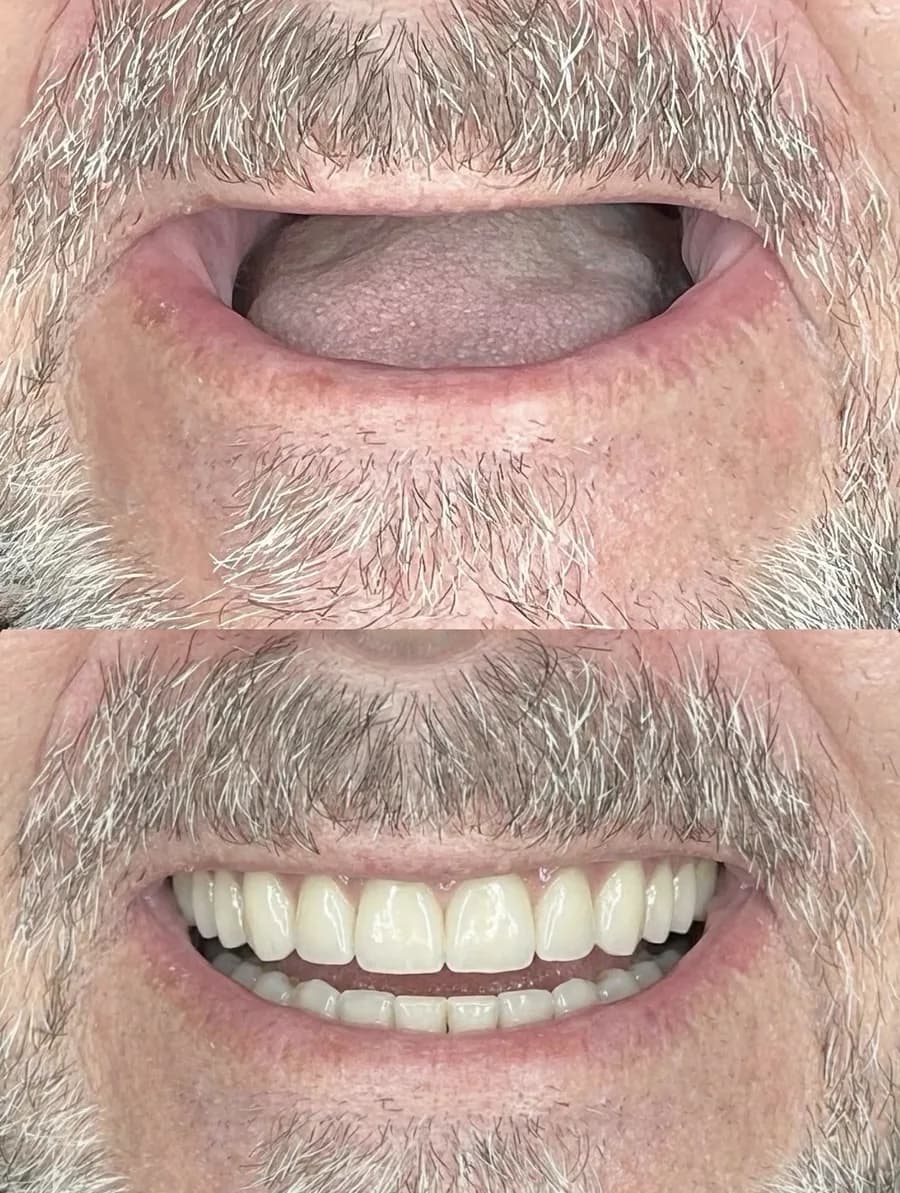
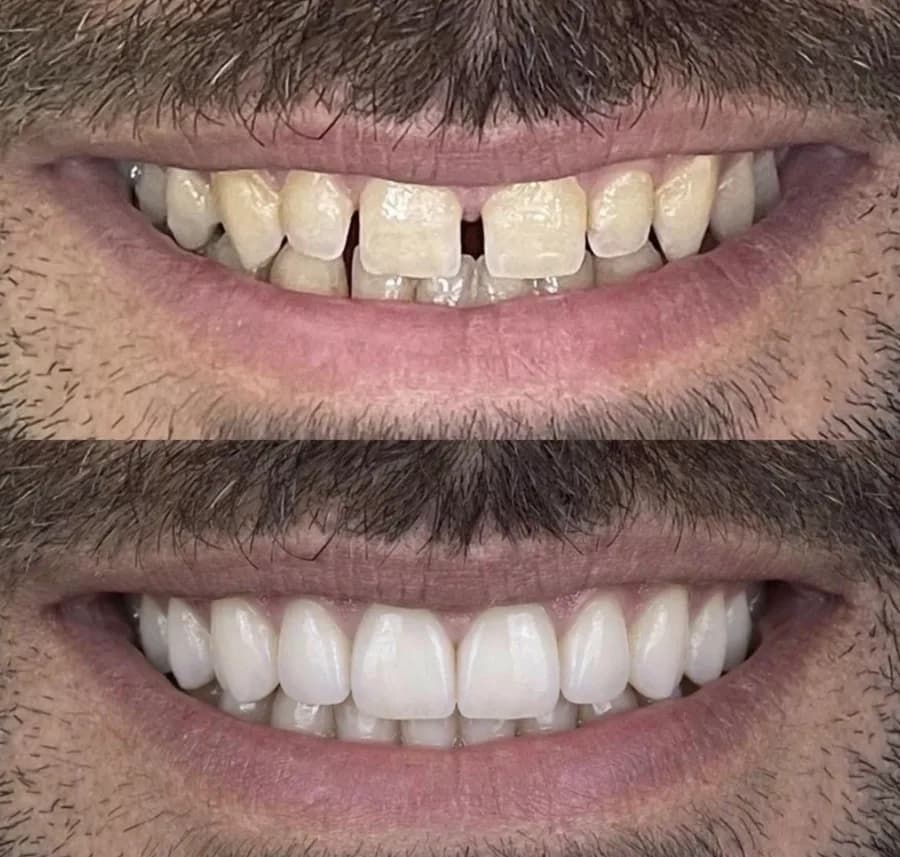
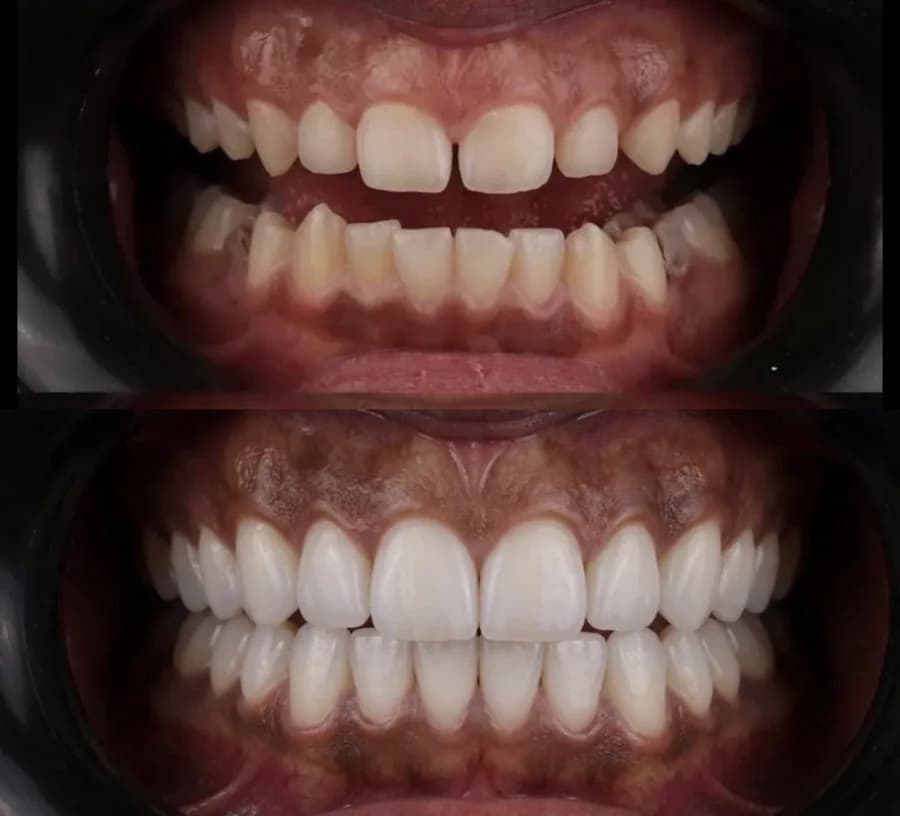
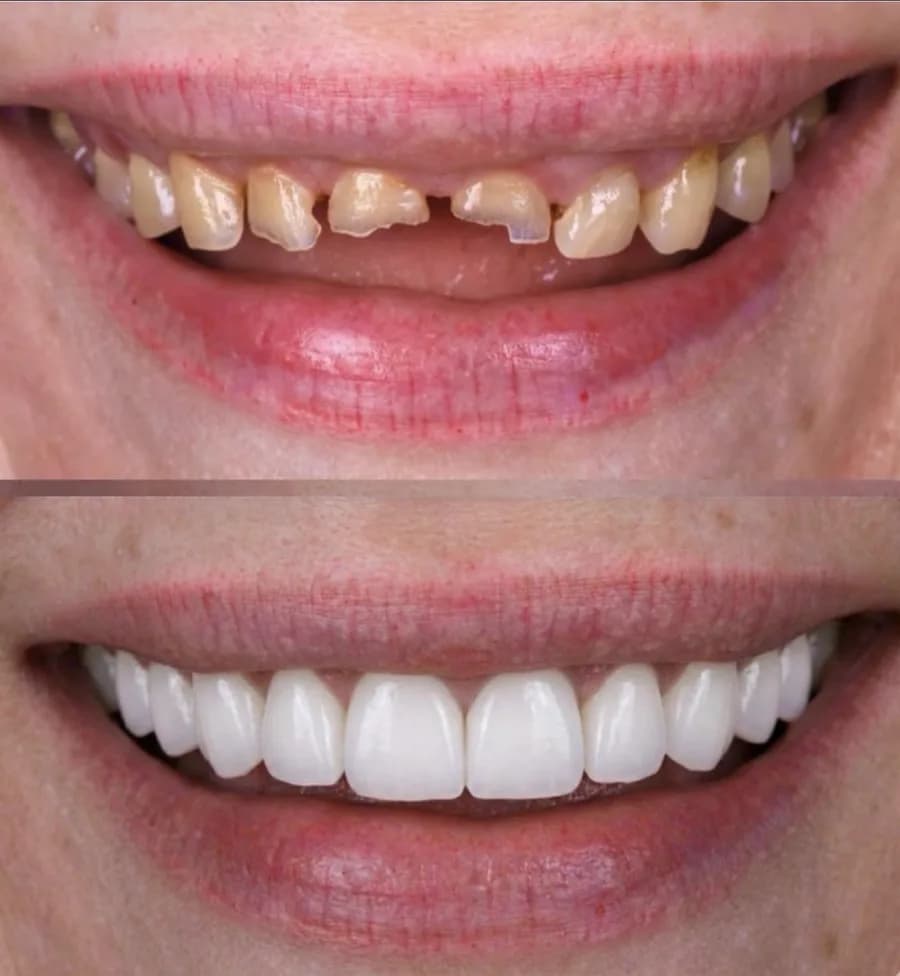
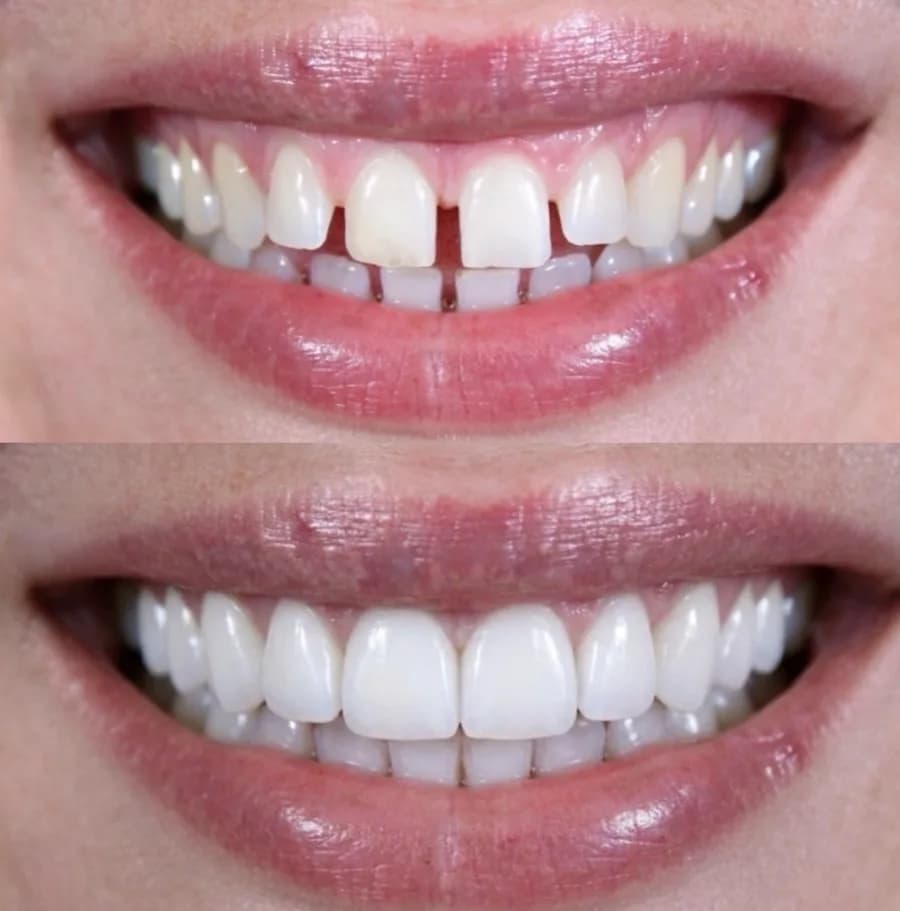
In every surgical or interventional procedure, results may vary from person to person. It is recommended that you obtain detailed advice from your dentist before the procedure.
All images are shared with the explicit consent of our patients.
See all resultsFrequently Asked Questions
In suitable cases, a temporary fixed prosthesis can be fitted shortly after surgery. However, this does not mean that the treatment is complete. The fitted prosthesis is temporary; the permanent prosthesis is prepared after the implants have fused to the bone (usually 3–6 months). Whether the temporary prosthesis can be fitted immediately depends on the initial anchorage value of the implants within the bone and may not be possible in every patient.
The surgical procedure is carried out under local anaesthesia and no pain is felt during the procedure. After the effect of the anaesthesia wears off, pain, swelling and tenderness lasting a few days are expected findings. These symptoms can be brought under control with the medicines your dentist recommends.
The angled placement of the back implants increases the distance between the points on which the prosthesis rests and allows the chewing force to be distributed over a wider area. However, whether four implants are sufficient depends on the bone density, jaw size and chewing force, and is assessed separately for each patient.
Swelling and tenderness usually subside within 3–5 days. The fusion of the implants to the bone takes 3–6 months. A soft diet usually needs to be continued for 6–8 weeks.
Smoking adversely affects the fusion of the implant to the bone and increases the risk of implant loss. It does not mean that the treatment cannot be done, but the success rate decreases. It is recommended that smoking be stopped or minimised, especially during the healing period.
No. The All-on-4 prosthesis is screwed onto the implants and cannot be removed by the patient. It can only be removed by the dentist, for check-up or cleaning purposes. In this respect it differs from a removable full denture.
The usage period varies depending on oral care, gum health, chewing habits and regular check-ups. A definite duration cannot be guaranteed. The use of an oral irrigator and interdental brushes, together with check-ups every six months, are decisive for the health of the tissues around the implant.
In the event of implant loss, the support of the prosthesis is affected. Depending on the bone condition, a new implant may need to be placed or the prosthesis may need to be replanned. For this reason, regular check-ups are important.
Related treatments
The content on this site is for information only and does not replace a clinical examination. The suitability, duration and scope of treatment are determined after a clinical assessment.
This content was prepared by Dt. Mevlüt Yazıcı.
Request an appointment.
Fill in the form to request an appointment and we'll get back to you shortly. You can also call us directly or message us on WhatsApp.
Altes Diş Kliniği
Altunizade, Üsküdar, İstanbul
- PHONE+90 533 474 43 94
- EMAIL[email protected]
- ADDRESSAlperen İş Merkezi, Valide-i Atik Mahallesi, Altunizade, Nuhkuyusu Cd D:191/B, 34664 Üsküdar/İstanbul
- WORKING HOURSWeekdays 10:00–19:00 · Saturday 10:00–16:00 · Sunday closed