
GENERAL DENTAL TREATMENTS
Root Canal Treatment
Endodontic treatment that aims to save the tooth without extraction
Provided at our clinic in Altunizade, Üsküdar (Istanbul).
IN SHORT
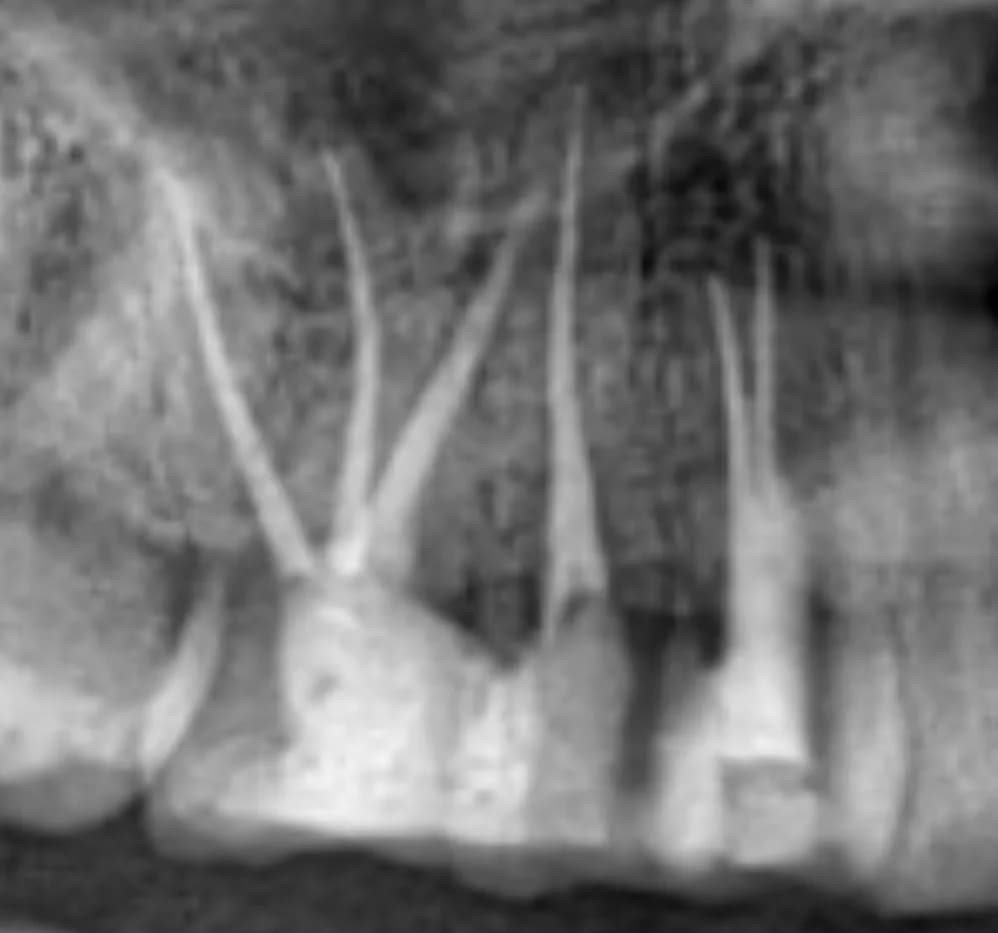
Root canal treatment is applied when the nerve and vascular tissue inside the tooth (the pulp) becomes inflamed or dies. This tissue is removed, the root canals are cleaned and shaped and then filled with a filling material. The aim is to keep the tooth in the mouth without extraction. The procedure is carried out under local anaesthesia and no pain is felt during it. After treatment, especially in back teeth, a crown is needed to prevent the tooth from fracturing.
Why is root canal treatment needed?
The outer layers of the tooth (the enamel and dentine) are non-living tissues. At the centre there is living tissue called the pulp, which contains nerves and blood vessels. The pulp provides the sensation and nourishment of the tooth.
When decay progresses and reaches the pulp, bacteria enter this tissue. The pulp becomes inflamed. Because the tooth is surrounded by hard tissues, the inflamed tissue cannot swell; instead the internal pressure rises. This is the cause of the severe, throbbing pain that precedes root canal treatment.
If the inflammation progresses, the pulp dies. The pain may ease at this stage — but this is not healing. The dead tissue and bacteria advance along the canal to reach the jawbone at the root tip and form a focus of inflammation there (an abscess or lesion).
Which signs suggest root canal treatment?
Throbbing toothache that starts on its own
Pain that increases at night or on lying down, or that wakes you from sleep
Pain that lasts for minutes after a hot or cold stimulus is removed
Pain on chewing or on touching the tooth
Swelling in the gum or a small blister (a fistula)
Darkening or a change of colour in a single tooth
There may be no symptoms. The pulp may have died silently and the situation may only be seen on an X-ray, as a dark area at the root tip. For this reason regular check-ups are important.
Is root canal treatment painful?
This is what patients fear most and it needs to be answered directly.
The procedure is carried out under local anaesthesia. Once the anaesthesia has taken effect, no pain is felt during the procedure.
The bad reputation of root canal treatment dates from a period when anaesthesia and instrument techniques were not at today's level. Today the real pain is the pain before the treatment. Root canal treatment is the procedure that ends that pain.
After the procedure, sensitivity lasting a few days and discomfort on chewing may be seen. This is part of the healing process of the tissue at the root tip and can be controlled with a painkiller.
The treatment process step by step
Examination and X-ray
The number of roots, the canal anatomy and whether there is inflammation at the root tip are assessed.
Anaesthesia
The procedure is carried out under local anaesthesia.
Isolation
The tooth is insulated from the rest of the mouth with a rubber dam. The canal must not come into contact with saliva and bacteria. This step directly affects the success of the treatment.
Access cavity
An opening is made in the upper surface of the tooth to reach the pulp.
Cleaning and shaping the canals
The pulp tissue is removed, the canals are cleaned with files and rinsed with disinfectant solutions.
Medication (if needed)
In cases where the inflammation is marked, an antibacterial medicament is placed in the canals and the tooth is temporarily sealed. The procedure continues at the next session.
Canal filling
The cleaned canals are filled so that no gap remains.
Upper restoration
The access cavity is closed. Then a permanent restoration (a filling or crown) is made.
How many sessions does it take?
Depending on the state of the inflammation and the canal anatomy, it is usually between 1 and 3 sessions. In cases with marked inflammation at the root tip, medication may be needed and the number of sessions increases.
Why is a crown needed after treatment?
This is the point patients most often skip and which leads to the loss of their teeth.
A tooth that has had root canal treatment is not nourished from within, because it has lost its pulp. It has also lost a significant amount of tissue because of the decay and the access cavity. These two factors make the tooth fragile.
The fracture usually happens a long time later and without warning. If the fracture extends below the root level, the tooth cannot be saved and is extracted. In other words, after a successfully completed root canal treatment the tooth can be lost simply because it was not covered.
For this reason, especially in the back teeth where the chewing force is high, a restoration that wraps around the tooth (an onlay or crown) is recommended after root canal treatment. In front teeth, if the substance loss is limited, a filling may be sufficient; the decision is made according to the amount of healthy tissue remaining in the tooth.
Risks and possible complications
Instrument fracture inside the canal. The fractured piece may not be removable; in this case the treatment plan changes.
Perforation. An unwanted opening may form in the canal wall.
A missed canal. The root canal system is complex and additional canals may be present. An uncleaned canal is one of the most common causes of a treatment failing.
Pain and swelling after the procedure. This usually lasts a few days.
Fracture of the tooth. Especially in cases where the upper restoration is delayed.
The treatment failing. In this case root canal retreatment or apical resection is considered.
The success rate of root canal treatment is reported to be high in the scientific literature, but no treatment can guarantee a hundred per cent success.
Root canal treatment or extraction and an implant?
This is the question patients ask most and it needs to be answered honestly.
A natural tooth has a structure that no implant can fully imitate. The connective tissue around the root (the periodontal ligament) cushions the chewing force and gives the tooth a sense of position. An implant has no such tissue; it fuses directly to the bone.
For this reason the general approach is to save a tooth that can be saved. If root canal treatment fails, retreatment or apical resection can be tried; if these too do not work, the option of extraction and an implant is still available. But an extracted tooth does not come back.
There are also situations in which the tooth cannot be saved: a vertical crack in the root, excessive substance loss, advanced bone loss. In these situations extraction is the correct decision and should not be forced.
Compare the options
| Root canal treatment | Extraction and implant | |
|---|---|---|
| Tooth | The natural tooth stays in the mouth. | The natural tooth is lost. |
| Connective tissue around the root | Preserved. Cushions the chewing force, provides a sense of position. | Absent. The implant fuses directly to the bone. |
| Procedure | Not surgical. | A surgical procedure is required. |
| Duration | Usually 1–3 sessions. | Fusion after surgery 3–6 months. |
| Bone | Because the root remains in the bone, the bone is preserved. | Bone resorption occurs after extraction; a graft may be needed. |
| If it fails | Retreatment or apical resection can be tried. | In the case of implant loss, replacement is needed. |
| Reversibility | Because the tooth stays in the mouth, later options remain open. | An extracted tooth does not come back. |
Which option is suitable is decided together after an intraoral examination.
Frequently Asked Questions
The procedure is carried out under local anaesthesia and no pain is felt during it. The bad reputation of root canal treatment dates from a period when anaesthesia techniques were not at today's level. The real pain is the pain before the treatment; root canal treatment is the procedure that ends that pain. Sensitivity lasting a few days may be seen after the procedure.
Depending on the state of the inflammation and the canal anatomy, it is usually between 1 and 3 sessions. In cases with marked inflammation at the root tip, medicament is placed in the canals and the number of sessions increases.
It is recommended especially in back teeth. A tooth that has had root canal treatment is fragile because it has lost its pulp and a significant amount of tissue. The fracture usually happens a long time later and without warning; if it extends below the root level, the tooth cannot be saved. After a successfully completed root canal treatment the tooth can be lost simply because it was not covered. In front teeth, if the substance loss is limited, a filling may be sufficient.
Yes. Root canal treatment removes the nerve of the tooth; it does not give it immunity against decay. The tooth can decay; however, because there is no nerve, it does not cause pain and the decay can progress unnoticed. Regular check-ups are important for this reason.
Thanks to the connective tissue around the root, a natural tooth cushions the chewing force and provides a sense of position; an implant has no such tissue. Also, as long as the root remains in the bone, the bone is preserved; bone resorption occurs after extraction. The general approach is to save a tooth that can be saved. However, if there is a vertical crack in the root, excessive substance loss or advanced bone loss, extraction is the correct decision. This assessment is made after an examination and an X-ray.
No. The pain going away may mean that the pulp has died. This is not healing. The dead tissue and bacteria reach the jawbone from the root tip and form a focus of inflammation. The treatment should not be postponed.
The success rate is reported to be high in the scientific literature, but a hundred per cent cannot be guaranteed. A missed canal, incomplete filling of a canal, delay of the upper restoration or a crack in the tooth can lead to failure. In this case root canal retreatment or apical resection is considered.
If there is an infection, postponing treatment may be more risky for the mother and baby. The second trimester is usually preferred. An X-ray is taken with a lead apron and only when necessary. You must inform your dentist about your pregnancy.
Related treatments
The content on this site is for information only and does not replace a clinical examination. The suitability, duration and scope of treatment are determined after a clinical assessment.
This content was prepared by Dt. Mevlüt Yazıcı.
Request an appointment.
Fill in the form to request an appointment and we'll get back to you shortly. You can also call us directly or message us on WhatsApp.
Altes Diş Kliniği
Altunizade, Üsküdar, İstanbul
- PHONE+90 533 474 43 94
- EMAIL[email protected]
- ADDRESSAlperen İş Merkezi, Valide-i Atik Mahallesi, Altunizade, Nuhkuyusu Cd D:191/B, 34664 Üsküdar/İstanbul
- WORKING HOURSWeekdays 10:00–19:00 · Saturday 10:00–16:00 · Sunday closed