
AESTHETIC DENTISTRY
E-max (Lithium Disilicate) Crown
A lithium disilicate-based glass ceramic restoration
Provided at our clinic in Altunizade, Üsküdar (Istanbul).
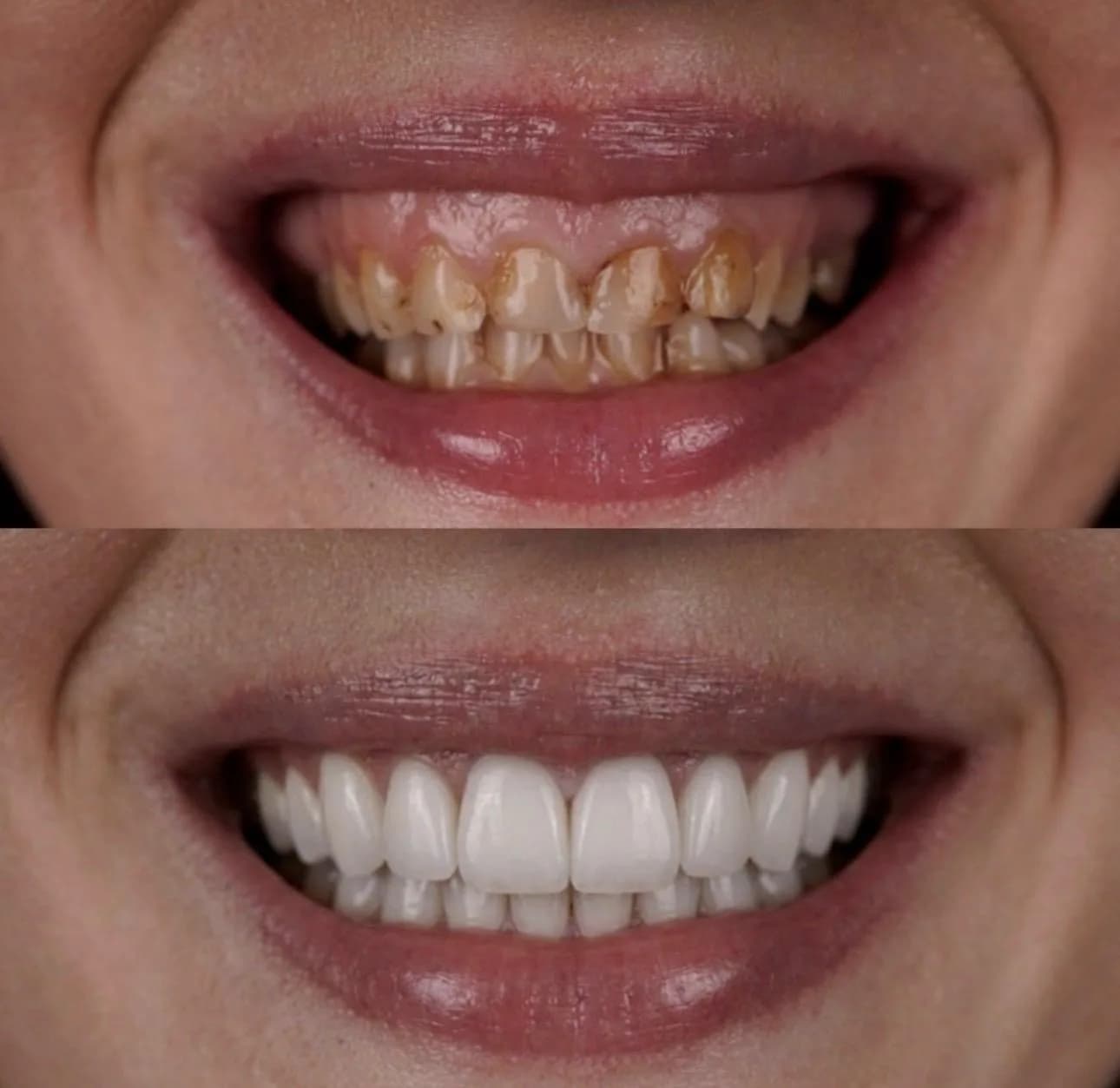
IN SHORT
E-max is the widely known commercial name for lithium-disilicate-based glass ceramic. The same material is also produced by other manufacturers. Because it transmits light close to that of natural tooth enamel, it is used especially on front teeth. Its fracture resistance is lower than that of zirconia; for this reason its use in long bridges and in areas that receive high chewing forces is limited. It can be applied both as a crown (full coverage) and as a veneer.
What is E-max?
E-max is the widely known commercial name for lithium-disilicate-based glass ceramic. The same material is also produced by other manufacturers. The properties described on this page belong to the material itself, independently of the brand.
Lithium disilicate is in the glass-ceramic group. The reason it is preferred in dentistry is that its light transmission is close to that of natural tooth enamel. A natural tooth transmits part of the light falling on it and therefore looks alive. A material that does not transmit light can look lifeless and dull even when it is the correct colour.
Light transmission and strength: an inverse relationship
In ceramic materials these two properties are inversely proportional to each other. The more light a material transmits, the lower its fracture resistance.
Lithium disilicate is a material with high light transmission; for this reason its fracture resistance is lower than that of zirconia. Zirconia, on the other hand, is highly durable; for this reason it transmits less light. Translucent types of zirconia with increased light transmission have been developed, but in these too the strength is reduced.
This means that neither material is superior to the other. Which one is suitable depends on the position of the tooth in the mouth and the force that will be placed on it.
Where is E-max used: crown or veneer?
Lithium disilicate can be applied in two different forms. This is the point most often confused by patients.
As a crown (full coverage): all surfaces of the tooth are covered. It is used on front teeth with extensive substance loss or that have had root canal treatment.
As a veneer: only the front surface of the tooth is covered. It is used for colour, minor shape irregularities and closing diastemas.
As an inlay/onlay (a piece that takes the place of a filling): it can be used on back teeth with extensive decay or substance loss, to repair part of the tooth.
So the question “E-max or a veneer?” is not a correctly framed question. E-max is a material; a veneer is a form. A veneer can be made from E-max.
In which cases is it used?
On front teeth, in cases where light transmission is important
In single-tooth crowns
In porcelain laminates
In inlay and onlay applications
In short bridges (in a limited way)
In which cases is it not suitable?
In long bridges. The fracture resistance may not be sufficient for such loads; zirconia is considered.
On back teeth that receive high chewing forces. This is assessed case by case.
In a severe teeth-clenching or grinding habit. Treatment is not entirely ruled out, but the use of a night guard is required; in some cases a more durable material is preferred.
In long prostheses over implants.
If insufficient healthy tissue remains in the tooth. Lithium disilicate bonds chemically to the tooth; sufficient enamel and dentine tissue is needed for this bond to be formed.
Why is bonding important?
Lithium disilicate does not merely sit mechanically on the tooth; it bonds chemically to the tooth with special adhesives. This bond makes up an important part of the strength of the restoration.
The practical result of this is as follows: the environment in which the bonding is carried out needs to be dry. Contamination with saliva or blood weakens the bond. For this reason, isolation (separating the area from the rest of the mouth) is applied during the procedure.
Maintenance and lifespan
The surface is resistant to staining. The cleaning of the boundary between the restoration and the tooth is the main factor determining the lifespan. The use of floss or an interdental brush and check-ups every six months are recommended.
The usage period varies depending on oral care, the bite relationship and chewing habits. A definite duration cannot be guaranteed.
Risks and possible complications
Fracture or cracking. The fracture resistance is lower than that of zirconia.
When applied as a crown, tooth preparation is irreversible.
Sensitivity after preparation; rarely, the need for root canal treatment.
Discolouration along the bonding line over time.
The restoration margin becoming visible with gum recession.
Before & after
Before-and-after images of some treatments carried out at our clinic. Results vary from person to person.
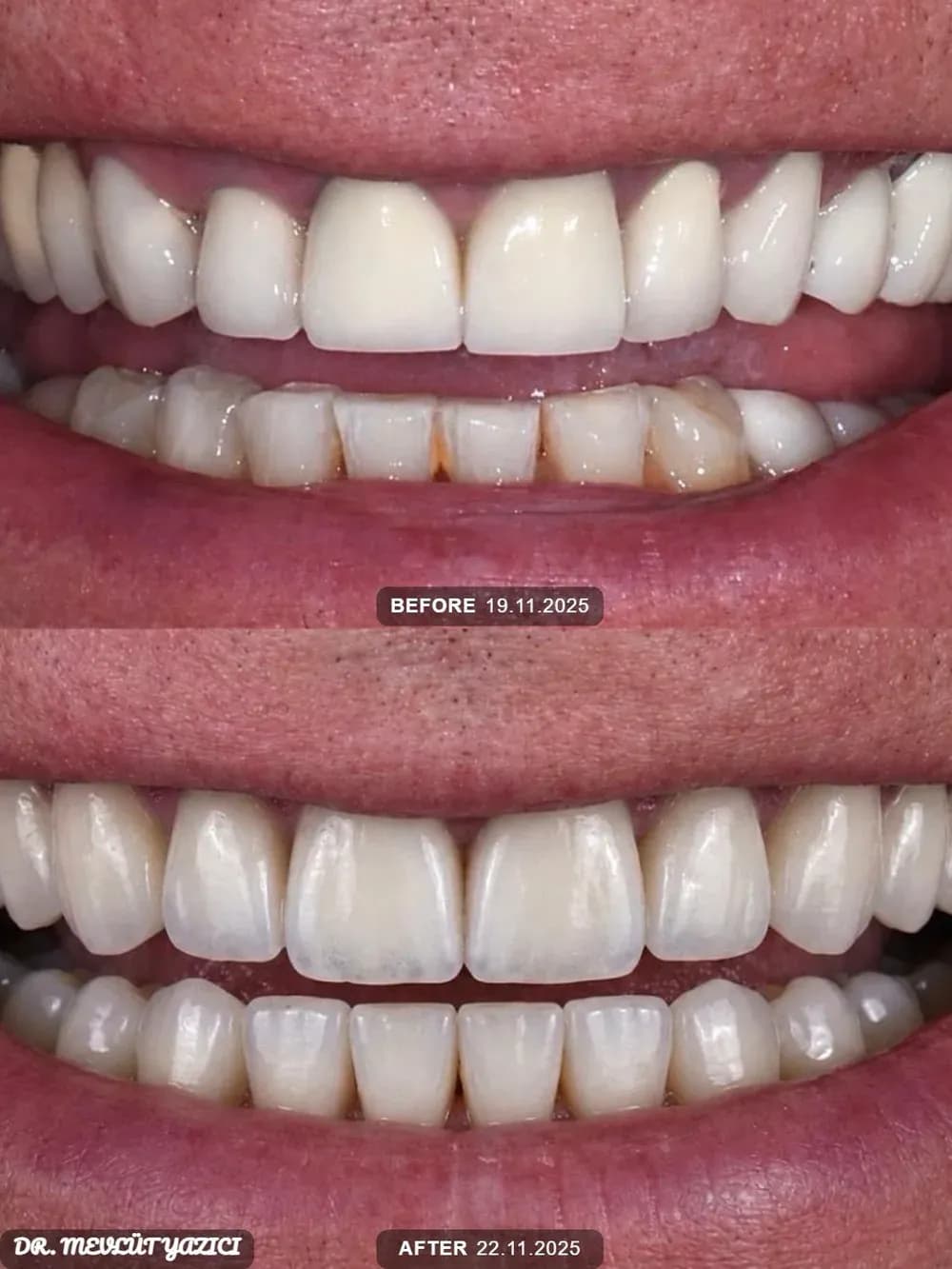
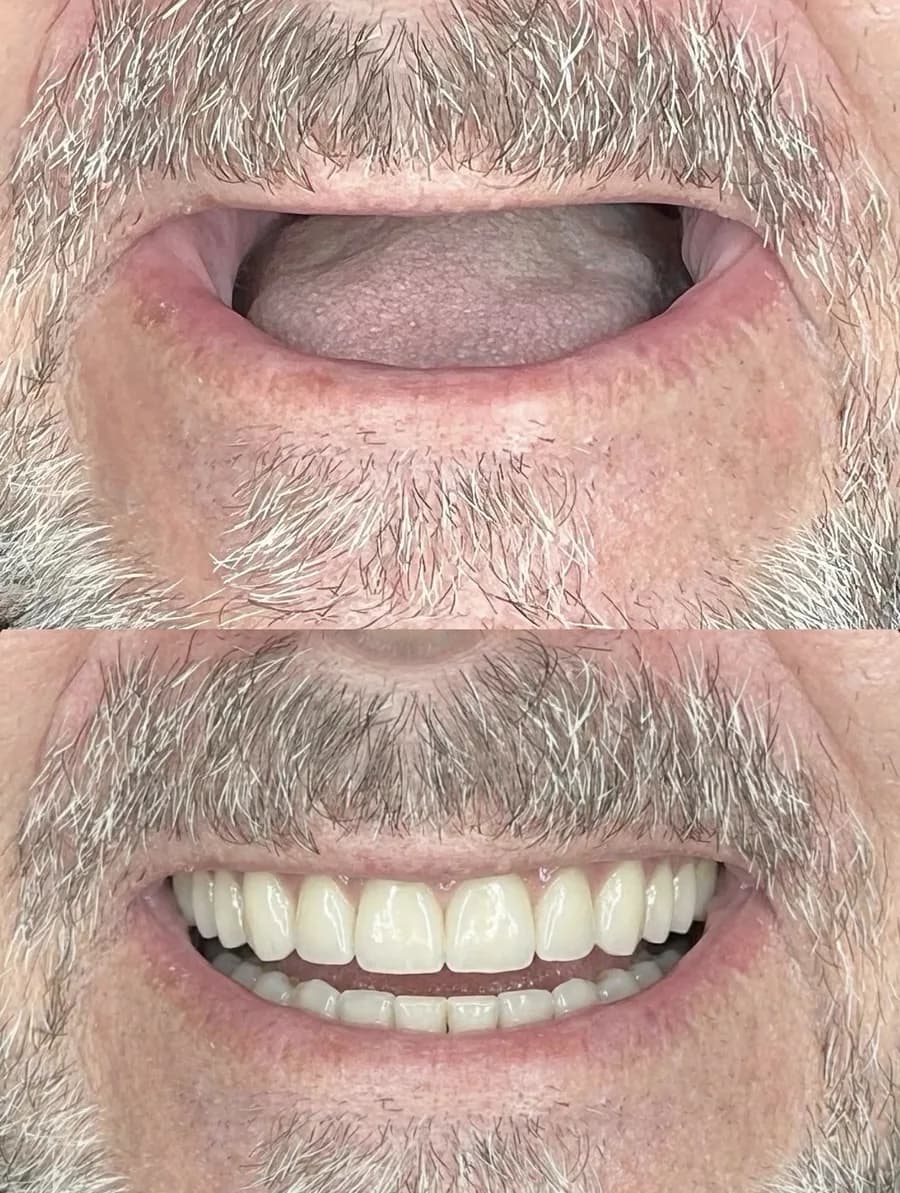
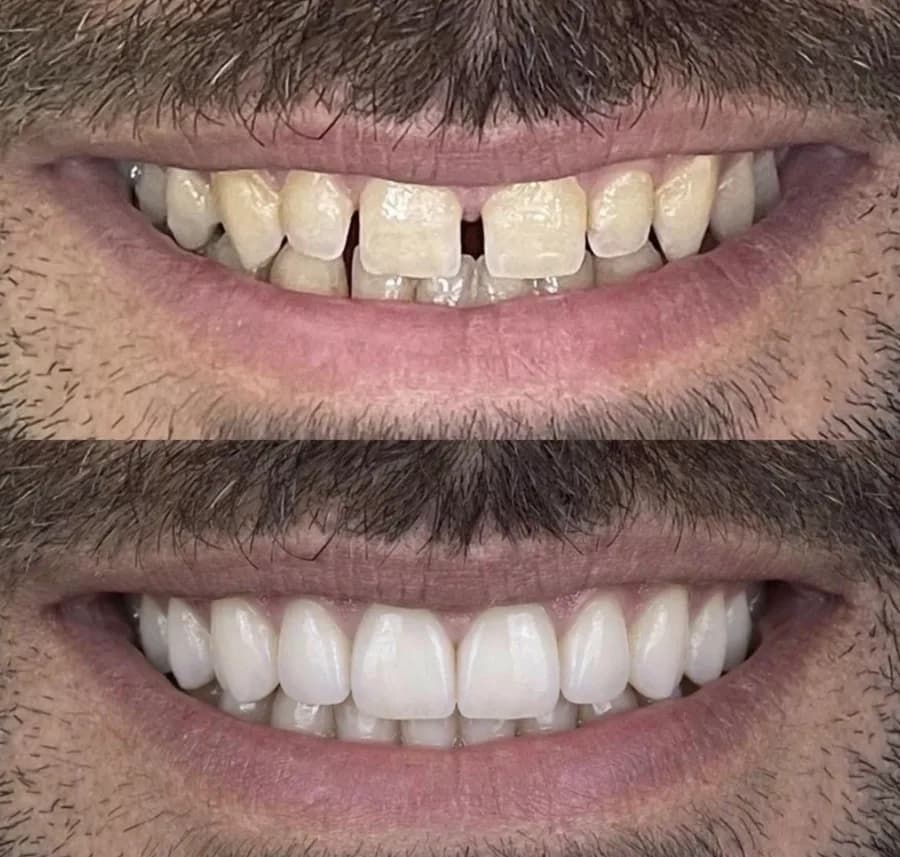
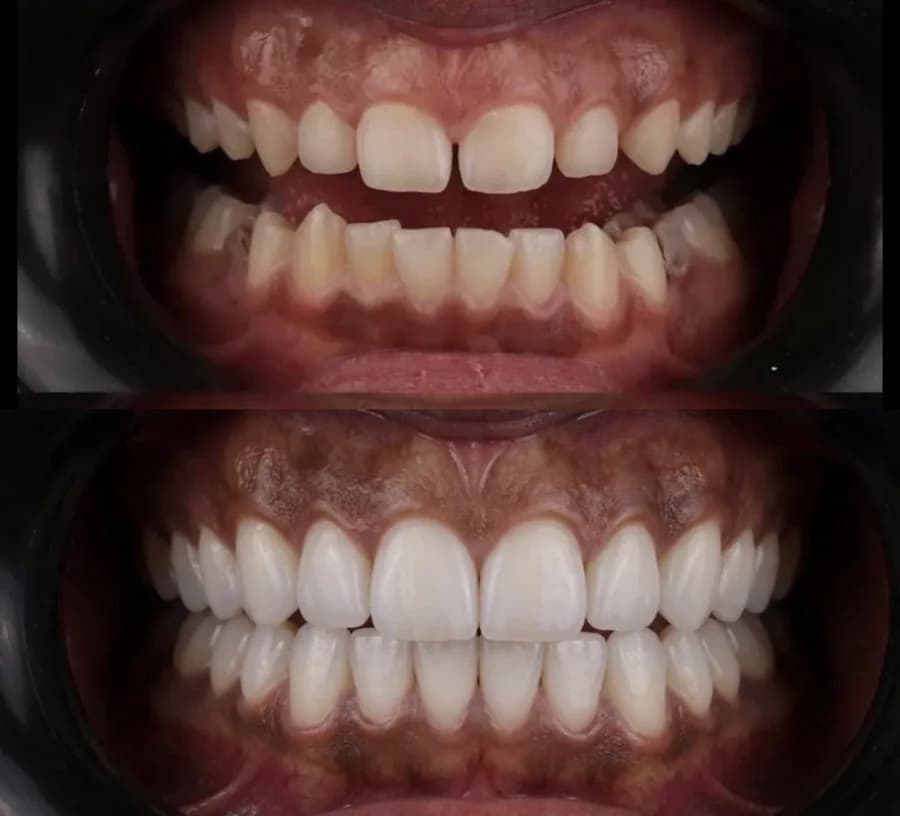
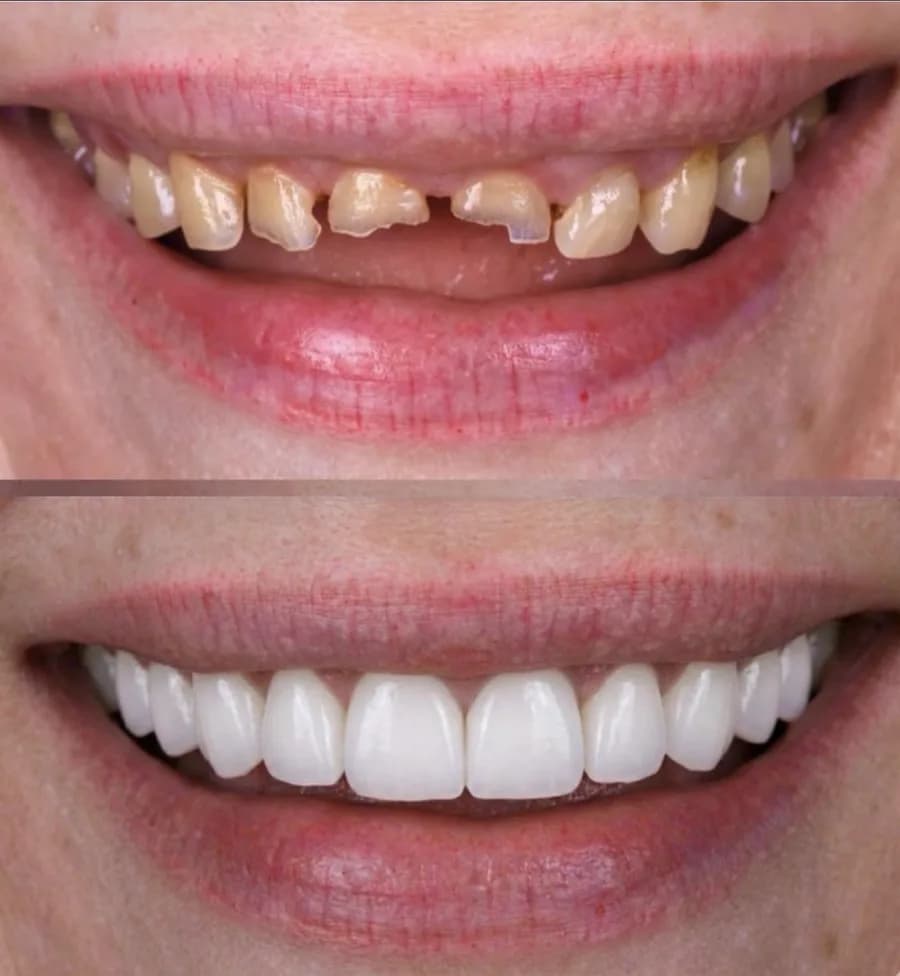
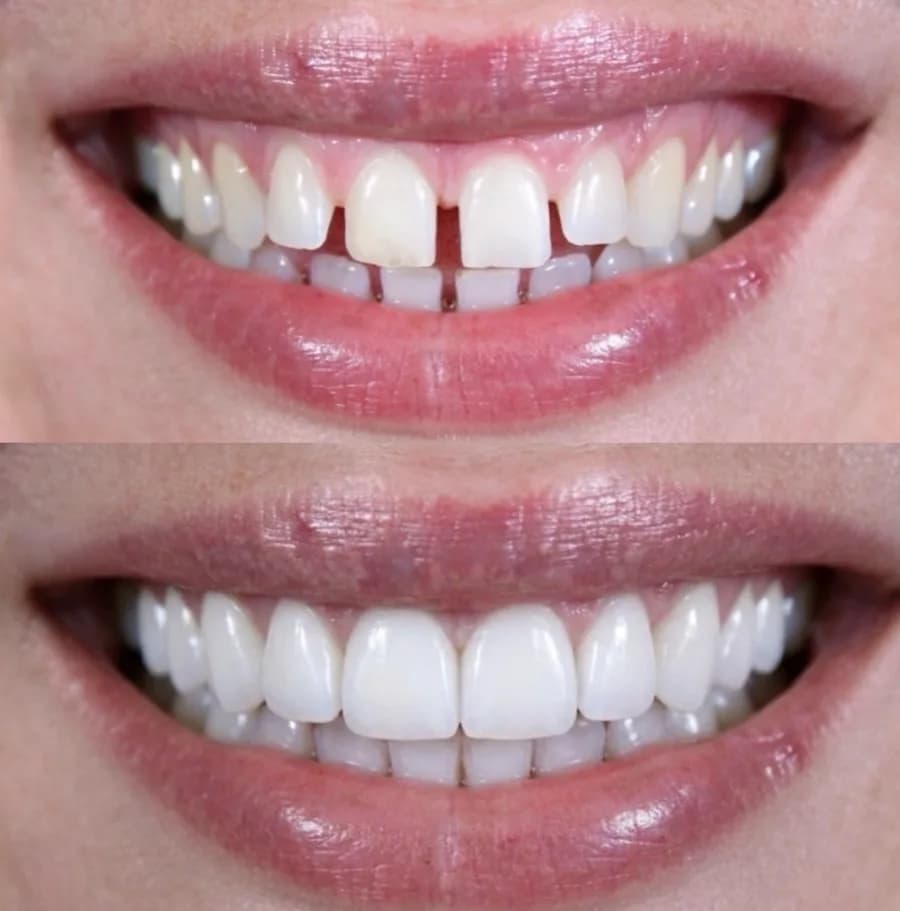
In every surgical or interventional procedure, results may vary from person to person. It is recommended that you obtain detailed advice from your dentist before the procedure.
All images are shared with the explicit consent of our patients.
See all resultsFrequently Asked Questions
Both are metal-free ceramics. E-max (lithium disilicate) transmits light closer to that of natural tooth enamel; for this reason it is used in the front region. Zirconia has higher fracture resistance; for this reason it can be used in the back region, in long bridges and in prostheses over implants. Neither is superior to the other; they suit different conditions. For a detailed comparison you can look at the Zirconia Crown page.
This question is not correctly framed, because it compares two different things. E-max is a material; a veneer is a form of application (covering only the front surface of the tooth). A veneer can be made from E-max. The correct question is this: should the whole tooth be covered (a crown), or only its front surface (a veneer)? This decision is made according to the amount of healthy tissue remaining in the tooth.
It can be used as a single-tooth crown or as an inlay/onlay. However, in areas that receive high chewing forces and in long bridges the fracture resistance may be limited; in these cases zirconia is considered. The decision is made by assessing the bite relationship and any teeth-clenching habit.
Yes. E-max is the widely known commercial name for lithium-disilicate-based glass ceramic. The same material is also produced by other manufacturers. The properties described on this page belong to the material itself, independently of the brand.
Teeth clenching markedly increases the force placed on the restoration. E-max is not entirely ruled out, but the use of a night guard is required; in some cases a material with higher fracture resistance is preferred. The assessment is made according to the severity of the clenching and the position of the tooth.
The ceramic surface is resistant to staining and does not change colour over time. However, discolouration may be seen along the bonding line between the restoration and the tooth.
Related treatments
The content on this site is for information only and does not replace a clinical examination. The suitability, duration and scope of treatment are determined after a clinical assessment.
This content was prepared by Dt. Mevlüt Yazıcı.
Request an appointment.
Fill in the form to request an appointment and we'll get back to you shortly. You can also call us directly or message us on WhatsApp.
Altes Diş Kliniği
Altunizade, Üsküdar, İstanbul
- PHONE+90 533 474 43 94
- EMAIL[email protected]
- ADDRESSAlperen İş Merkezi, Valide-i Atik Mahallesi, Altunizade, Nuhkuyusu Cd D:191/B, 34664 Üsküdar/İstanbul
- WORKING HOURSWeekdays 10:00–19:00 · Saturday 10:00–16:00 · Sunday closed