
GENERAL DENTAL TREATMENTS
Inlay & Onlay Filling
The tissue-preserving step between a filling and a crown
Provided at our clinic in Altunizade, Üsküdar (Istanbul).
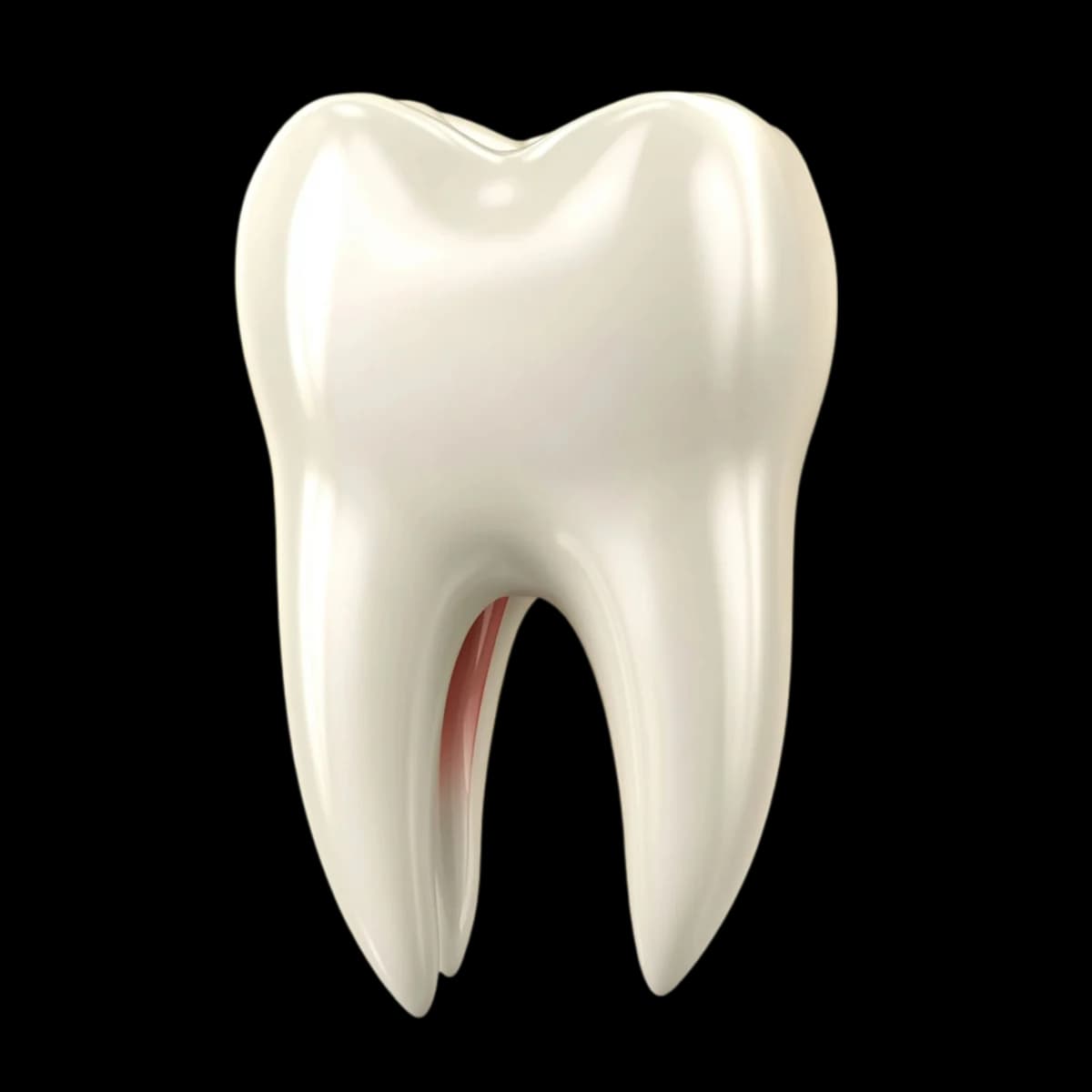
IN SHORT
Inlays and onlays are porcelain or composite pieces prepared in a laboratory after an impression is taken and then bonded to the tooth. They are used when a conventional filling is not enough but there is no need to cover the whole tooth. An inlay fills the cavity on the chewing surface of the tooth; an onlay also covers one or more cusps (the peaks on the chewing surface). It is the step between a filling and a crown and preserves more sound tooth tissue.
Why is an intermediate step needed?
A filling relies on the sound tooth tissue around it. As the substance loss grows, this support decreases; the filling fractures or falls out over time and a crack can form in the tooth.
At this point there seem to be two options: either to enlarge the filling or to cut the tooth completely and make a crown.
However, enlarging the filling weakens the tooth, and making a crown removes substance from the sound tissue too. Inlays and onlays are the step between these two: only as much tissue as the cavity requires is removed, and the rest is preserved.
The difference between an inlay and an onlay
Inlay. It fills the cavity on the chewing surface of the tooth, lying between the cusps. The cusps are sound and are not covered.
Onlay. One or more cusps are also covered. It is needed when a cusp has fractured or cracked.
The decision is made according to which surfaces the substance loss covers.
When is it applied?
In extensive decay or substance loss, in cases where a filling will not find sufficient support
In teeth where a cusp has fractured
In back teeth that have had root canal treatment. A root-canal-treated tooth is fragile; an onlay prevents fracture by covering the cusps. This is an option that can protect the tooth without making a crown.
In back teeth worn as a result of a teeth-clenching habit
In place of large and repeatedly fracturing fillings
When is it not enough?
If the sound tissue left in the tooth is very little. In this case a crown is needed.
If the walls of the tooth are fractured.
If the tooth is to be used as a bridge abutment.
If there is active gum disease or decay. These are treated first.
The application process
Examination and X-ray
The extent of the substance loss and its closeness to the pulp are assessed.
Anaesthesia and cleaning of the decay.
Cavity preparation
Unlike a filling, a certain shape is given to the cavity so that the piece to be produced in the laboratory can seat in place.
Impression
Taken with a conventional impression or an intraoral scanner.
Temporary filling
The tooth is protected until the permanent piece is prepared.
Bonding
The piece is bonded to the tooth with a special adhesive. Isolation is needed; the surface has to be dry.
Bite check and polishing.
Risks
Sensitivity after the procedure. It is usually temporary.
In deep cavities, the pulp being affected and root canal treatment being needed.
Fracture or loss. Especially in patients with a teeth-clenching habit.
Marginal leakage and the development of decay at the boundary.
Sensitivity during the temporary-filling period, or the temporary filling coming off.
The restorative ladder: filling, inlay/onlay, crown
An inlay/onlay is the step on the restorative ladder between a filling and a crown. The table below compares the three options in terms of the tissue removed and the extent of coverage.
Compare the options
| Conventional filling | Inlay / Onlay | Crown | |
|---|---|---|---|
| Tissue removed | Only the decay. | Decay + the shape the cavity requires. | 1–1.5 mm from all surfaces of the tooth. |
| Area covered | The cavity. | The cavity (+ the cusps in an onlay). | The whole tooth. |
| Where it is made | In the mouth, in a single session. | In a laboratory; two sessions. | In a laboratory; two sessions. |
| Suitable situation | Small and medium cavity. | Large cavity; the walls of the tooth are sound. | Extensive substance loss; a bridge abutment. |
| Sound tissue | Preserved. | Largely preserved. | Removed from the sound tissue too. |
| Fracture resistance | Medium. | High. | High. |
Which option is suitable is decided together after an intraoral examination.
Frequently Asked Questions
A conventional filling is made in the mouth, in a single session, and placed directly into the cavity. An inlay and onlay, on the other hand, are prepared in a laboratory after an impression is taken and then bonded to the tooth; for this reason two sessions are needed. They are preferred in large cavities, in cases where a filling will not find sufficient support, and their fracture resistance is higher.
When a crown is made, substance is removed from all surfaces of the tooth; the sound tissue is cut too. An onlay, on the other hand, removes only as much tissue as the cavity requires and preserves the rest. If the walls of the tooth are sound and the remaining tissue is sufficient, an onlay is the option that protects the tooth more. If there is extensive substance loss, a crown is needed.
Yes. Back teeth that have had root canal treatment are fragile and their cusps need to be covered. An onlay can provide this without removing as much tissue as a crown. The decision is made according to the amount of sound tissue left in the tooth; if the tissue is very little, a crown is needed.
The usage period varies depending on the size of the piece, its position, oral care, the bite and any teeth-clenching habit. A definite duration cannot be guaranteed. Its fracture resistance is higher than that of a conventional filling.
Usually two sessions. In the first session the decay is cleaned, the cavity is prepared, an impression is taken and a temporary filling is placed. In the second session the piece prepared in the laboratory is bonded.
Related treatments
The content on this site is for information only and does not replace a clinical examination. The suitability, duration and scope of treatment are determined after a clinical assessment.
This content was prepared by Dt. Mevlüt Yazıcı.
Request an appointment.
Fill in the form to request an appointment and we'll get back to you shortly. You can also call us directly or message us on WhatsApp.
Altes Diş Kliniği
Altunizade, Üsküdar, İstanbul
- PHONE+90 533 474 43 94
- EMAIL[email protected]
- ADDRESSAlperen İş Merkezi, Valide-i Atik Mahallesi, Altunizade, Nuhkuyusu Cd D:191/B, 34664 Üsküdar/İstanbul
- WORKING HOURSWeekdays 10:00–19:00 · Saturday 10:00–16:00 · Sunday closed