

More Than a Filling
Inlay / Onlay
We offer porcelain durability by preserving the healthy tissue in your teeth with wide material loss. Rescue your tooth with the precise fit prepared in laboratory environment.
- Maximum Tissue Protection
- Ceramic Durability
- Precise Margin Fit
What are Inlays and Onlays?
Inlays and onlays are a restoration option that is more durable than fillings and more conservative than crowns for large cavities or damage. They are custom-made in the laboratory and bonded to the tooth.
Inlay: Placed between the cusps (bumps) on the chewing surface of the tooth. Onlay: Also covers one or more cusps. Also called a "partial crown."
With over 15 years of experience, we successfully perform inlay/onlay applications. It offers an ideal middle ground for patients who need large fillings but have too much healthy tooth structure for a full crown.
Conservative Approach
Much less shaving is done from your tooth compared to full crowns, your natural tooth is preserved.
High Strength
Porcelain baked in laboratory environment is much more resistant than fillings made in the mouth.
End to Food Impaction
Since the margin fit is precise, it prevents food debris from entering between the teeth and gum problems.
Long-Lasting Solution
It is economical and permanent with a usage life of up to 15-20 years with proper care.
CAD/CAM Supported Production
At Altes Clinic, we produce our inlays and onlays with digital scanning and CAD/CAM technology in millimetric precision. In this way, your restoration fits your tooth precisely like a puzzle piece and eliminates the risk of leakage.
Complete Restoration in Two Steps
Preparation and Digital Scanning
Caries is cleaned, tooth is shaped, and temporary restoration is placed by taking impression with digital scanner.
Design and Block Selection
The most suitable form for your tooth is designed in computer environment and carved from the suitable color block.
Clinical Fitting
The restoration coming from the laboratory is tried on your tooth, bite and aesthetic checks are performed.
Permanent Cementation
It is fixed to the tooth with special bonding systems and the process is professionally completed by polishing.
Altes Clinic Restorative Standards
High Bio-Compatibility
We use ceramics that provide full harmony with the gum and do not create allergic reactions.
Art of Color and Form
We prepare your restoration in one-to-one harmony with the color and natural details of your adjacent teeth.
Digital Precision
We reduce the margin of error to zero with digital scanning instead of traditional paste impressions.
Strong Bonding
We use high-quality bonding systems to ensure the durability of the restoration.
Functional Bite
We precisely adjust your relationship with the opposite jaw during chewing.
Curiosities About Inlay/Onlay
Most frequently asked questions about this special treatment between filling and crown:
Should I choose inlay/onlay or filling?
Filling is sufficient for small cavities; but if a large part of the chewing surface of the tooth is damaged, onlay is much safer.
Does this procedure cause any harm to my tooth?
On the contrary, it strengthens the tooth against fractures by surrounding it like a circle and prolongs its life.
Is porcelain or composite better?
Porcelain (ceramic) ones are more aesthetic and much more resistant to wear, it is our primary choice.
How many days does the treatment take?
Usually there is a laboratory period of 3-5 days between impression taking and bonding.
How about sensitivity?
Thanks to modern bonding systems, the risk of post-operative sensitivity is minimum.
Protect Your Tooth Without Losing It
Inlay/onlay restorations are the most correct protective step before extraction or full crown in your teeth with wide material loss.
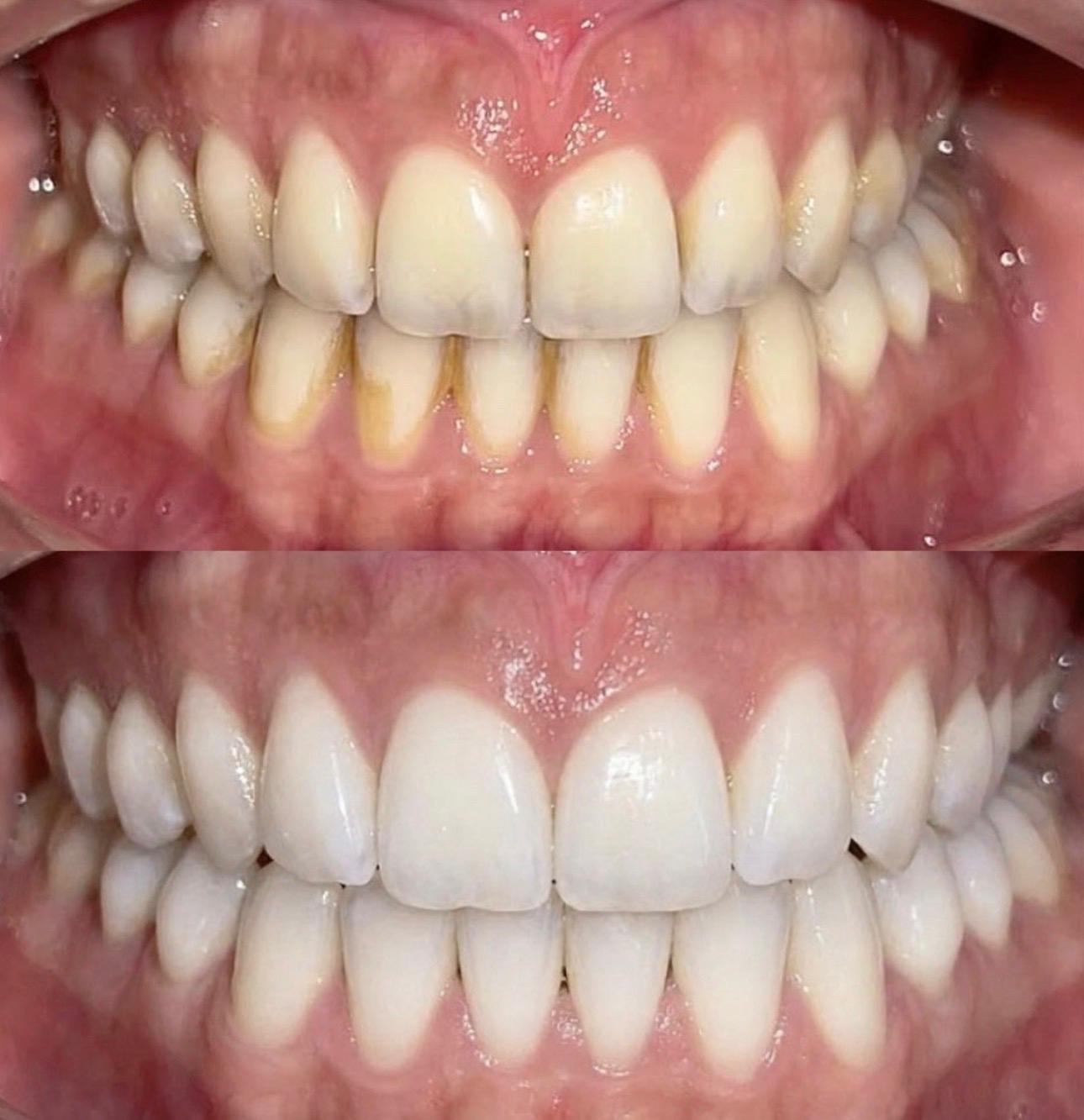
Our Restoration Examples
Do you feel leakage under your old large filling?
Send Photos for Digital Analysis: +90 533 474 43 94Frequently Asked Questions
Porcelain restorations bonded with the correct technique bind chemically to the tooth and there is almost no risk of falling off.
No, since it is performed under local anesthesia, you will not feel any pain.
Yes, onlay is one of the best options especially to protect teeth weakened after root canal treatment.
No, porcelain material does not change color with factors such as tea, coffee, or cigarettes.
The temporary filling placed after the impression is taken is more sensitive; you should not chew very hard things with that side.
Let's Make Your Restoration Plan
Book an examination appointment with detailed x-ray analysis now to learn which treatment is suitable for you.
Contact Form
Information & Contact
You can contact us to get detailed information about our dental health services.
Info & Contact